

The lease may work. The economics may work. That doesn’t mean the space will.
A commercial real estate broker and a project manager bring different perspectives to a potential lease.
The broker understands the market, available properties, lease terms and transaction.
The project team looks at what happens after you say yes.
That distinction matters because a space that looks attractive during a real estate search can become considerably less attractive once someone starts asking what it will actually take to make it work.
Before committing to the space, I would want to know what the project team sees.
The Real Estate Decision and the Project Decision Are Connected
A tenant may evaluate several locations based on rent, incentives, location, size, lease term and other business considerations.
Those are important.
But the economics of the deal don’t stop with the lease.
- What will the space cost to build?
- Does the existing layout support the business, or will substantial demolition be required?
- Can the building systems support the proposed use?
- Is there adequate electrical capacity?
- What will be required for technology, security and audiovisual systems?
- Are there code or accessibility issues?
- How long will design, approvals and construction actually take?
Those aren’t questions to ask after the lease has been signed if the answers could have affected the decision to lease the space.
The Broker and Project Manager See Different Things
A good tenant representative broker brings market knowledge and transaction experience that the project manager doesn’t replace.
Likewise, the broker doesn’t replace the project team.
The project manager, architect, engineers and other specialists may identify physical or operational conditions that aren’t apparent from the lease economics or an initial tour.
A floor plan may show enough square footage but use it inefficiently.
Existing HVAC may be adequate for the previous tenant but not for the proposed occupancy.
Electrical service may require upgrades.
A seemingly minor change in use may create code or permitting implications.
A construction allowance may sound substantial until the team develops a realistic project budget.
None of those conditions necessarily makes the space wrong. But the tenant should understand them before making the commitment.
Bring the Project Perspective Into the Search
The project manager doesn’t need to accompany the broker on every initial tour.
Early in the search, the broker may be looking at numerous properties that can quickly be eliminated based on location, economics or basic requirements.
Once the list gets serious, the project perspective becomes more important.
That’s when I want someone asking:
What would we actually have to do to this space?
The answer may affect the comparison between two otherwise similar locations.
One space may require extensive infrastructure upgrades.
Another may have a more efficient floor plate.
One landlord may be offering a larger tenant improvement allowance, but the building conditions may require more work.
Another space may cost more in rent but allow the tenant to occupy months earlier.
The project implications become part of the transaction economics.
Test the Space Before You Negotiate Around It
Once a preferred location begins to emerge, the project team can help develop enough information to support the negotiation.
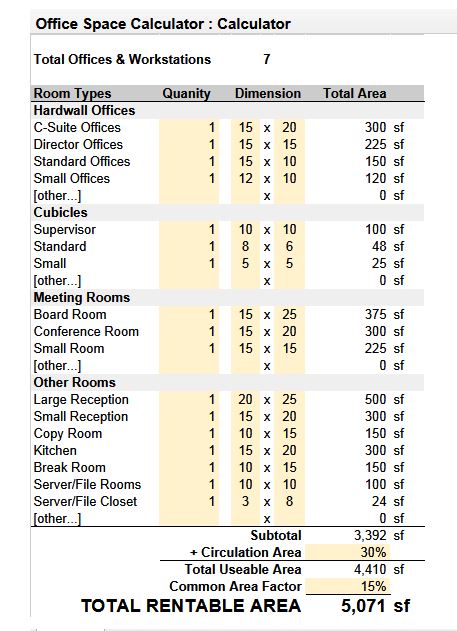
That may include preliminary programming, test fits, existing-condition reviews, conceptual budgets, schedule assumptions and identification of major building-system requirements.
The objective isn’t to design the entire project before signing a lease.
It’s to understand enough about the project to avoid negotiating the transaction around assumptions that haven’t been tested.
If the tenant knows that additional electrical capacity will be required, that can become part of the landlord discussion.
If the construction schedule requires early access to the space, that can be addressed.
If a particular improvement is essential to the tenant’s operation, responsibility for providing it can be clarified.
The earlier those issues are identified, the more opportunity there is to address them while the transaction is still being negotiated.
A Good Deal Has to Work After the Lease Is Signed
The broker’s job and the project team’s job shouldn’t compete with each other.
They should inform each other.
The broker may identify a property with favorable economics.
The project team may identify conditions that change those economics.
The broker can then use that information as part of the transaction strategy.
That’s the value of bringing the two disciplines together before the commitment is made.
The question isn’t whether the broker found a good space.
It’s whether the organization understands what happens after it becomes your space.
Leadership takeaway: Don’t separate the real estate decision from the project required to make the real estate work.
About the Author: Richard Neuman advises organizations on capital planning, project governance, and complex capital programs. He has overseen more than $2 billion in capital investments across commercial real estate, healthcare, utilities, industrial, broadcast, and development projects.
He writes candidly from an owner-side perspective about the executive decisions and organizational dynamics that shape capital project outcomes.
Leading a major capital program or facing a complex capital decision?
Contact Richard.
Subscribe for insights on capital planning, project governance, and the executive decisions that shape project outcomes long before construction begins.



Be the first to comment on "Your Broker Found the Space. Has the Project Team Looked at It?"