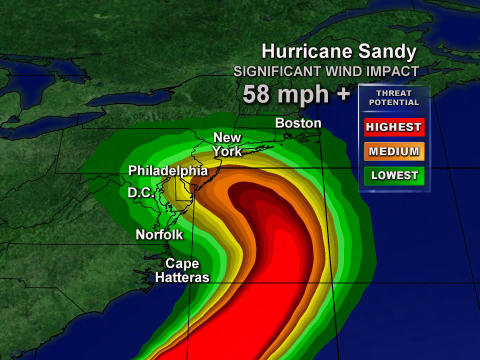
Written in the immediate aftermath of Hurricane Sandy, when businesses across the New York region were trying to restore operations, find temporary space and reconnect with employees and customers.
Editor’s Note — October 2026: This article was originally published on November 6, 2012, days after Hurricane Sandy. It is preserved largely as written because it reflects what businesses and commercial real estate professionals were confronting at the time.
When I was asked by my friends at @theBrokerList to contribute my thoughts on this issue, my initial reaction was to mention a local commercial real estate firm that had e-blasted its long- and short-term property availability for businesses that had been displaced.
Actually, as a project management firm, I have been inundated with emails from brokers, restoration companies, IT providers, rubbish removal companies and dozens of other firms ready to provide help.
What a great way to communicate how your service can assist those affected businesses.
But yesterday, as I walked through a hotel lobby and a coffee shop here on Long Island that had been devastated by Sandy, they were packed with business owners and facility managers who were displaced and desperately trying to conduct their affairs alongside homeowners who had lost property.
These places were serving as makeshift offices.
One comment I kept overhearing was:
“My corporate email server is down, so send your email to my private address.”
I quickly realized that if email servers are down, are clients receiving these valuable service-provider e-blasts? And are these service providers staffed, gassed up and operating without shortages themselves?
If commercial real estate professionals can identify suitable space, is it furnished? Does it have internet and phones?
How do you handle communications when, in normal times, it takes six weeks to get service?
How do you move items when moving companies are literally and figuratively under water?
Most importantly, do tenants have the in-house talent, time and wherewithal to execute a plan that gets their business up and running quickly while operating from a coffee shop?
It is a daunting task for any business owner, even before the crisis.
My advice to commercial real estate professionals and vendors is to reach out to your contacts by telephone. Call them on their cell phones. Call their business phones, which may be redirected to a cell phone. Drive to their office if you can get gas. Reach out through LinkedIn.
Don’t rely solely on e-blasts.
Leverage your networks.
Remember, these folks are traumatized and may not know how to proceed.
And don’t forget to engage a project manager who has the crisis-management expertise and multiple resources to execute an effective plan that reduces the stress and anxiety on the displaced business.
Commercial real estate project managers oversee the coordination of assets and infrastructure, allowing tenants to conduct their business.




We see private finance still has a place in our local market for those who still struggle qualifying for a traditional mortgage. Our broker is using a private loan to purchase an office building this month and is happy to pay a premium rate for the opportunity.