Mixed-use development isn’t created by putting several uses on one site. The real test is whether those uses work together well enough to make people want to stay.
Originally published in the Hauppauge Reporter, August 2019. Updated September 2026 with an owner-side perspective on mixed-use development.
Owners and developers have long looked for ways to make developments more than places people visit for a single purpose.
Office.
Retail.
Residential.
Hospitality.
Restaurants.
Entertainment.
Public space.
Putting several of those uses together can create mixed-use development.
But it doesn’t necessarily create a destination.
The more important question is:
“What makes people want to be here when they don’t have to be?”
Mixed Use Is Not the Same as Integration
A successful mixed-use development isn’t simply a collection of buildings with different uses.
The uses need to reinforce one another.
Someone may leave work, meet friends for dinner, shop, attend an event or return to a residence without getting back into a car.
That convenience can be valuable.
But it depends on how the development is planned.
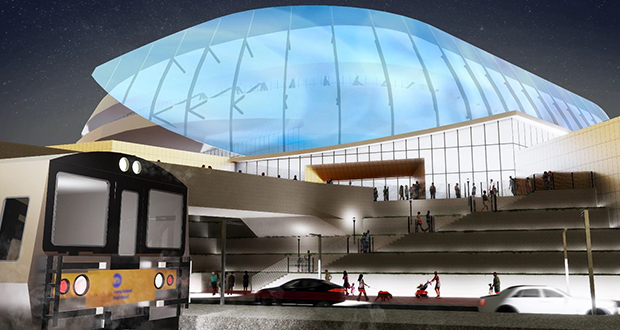
Walking routes, public spaces, building entrances, parking, transportation, landscaping and the relationship between uses all affect whether the development feels like one place or several unrelated projects sharing an address.
The Experience Happens Between the Buildings
Developers naturally spend enormous effort on the buildings themselves.
But destinations are often defined by what happens between them.
Can people move comfortably from one use to another?
Are there places to gather?
Does the development feel active at different times of day?
Can visitors understand where they are and where they are going?
Are public areas merely circulation space, or are they places people actually want to use?
Those questions turn site planning into part of the development strategy.
Convenience Still Matters
The original case for mixed-use development remains straightforward.
People value convenience.
A development that brings work, dining, services, entertainment and other activities into close proximity can reduce the friction of moving between them.
That can benefit residents, office tenants, retailers and visitors.
But convenience has to be designed into the project.
A restaurant that is technically next to an office building may still feel disconnected if reaching it requires crossing a large parking field or navigating an unfriendly pedestrian route.
Proximity alone isn’t integration.
Programming Can Change How a Place Is Used
Physical design is only part of the equation.
Events, entertainment, seasonal activities and other programming can give people reasons to use spaces that might otherwise remain empty.
That was part of the thinking behind many mixed-use developments when this article was originally written in 2019, and the principle remains relevant.
The capital project creates the setting.
Operations determine what happens there.
Owners should think about both.
The Business Case Has to Support the Experience
There is also a practical limit.
Every amenity, public space and experiential feature has a capital cost, operating cost or both.
The objective isn’t to add features simply because they make a rendering more attractive.
The owner needs to understand what each element contributes to the development.
- Does it support leasing?
- Increase dwell time
- Strengthen residential demand?
- Help attract office tenants?
- Support retail traffic?
- Differentiate the property?
The experience still needs a business case.
Not Every Development Needs to Become a Destination
This may be the most important distinction.
Some properties succeed because they are efficient, accessible and economical.
They don’t need entertainment programming, elaborate public spaces or a complicated mix of uses.
The strategy should follow the asset and market—not the development trend.
For projects intended to become destinations, however, the owner needs to think beyond individual buildings.
The value is created by how the pieces work together.
Leadership takeaway: Mixed-use development becomes a destination when the uses, public spaces, circulation and programming reinforce one another. Adding more uses isn’t the strategy; creating reasons for people to stay is.



Be the first to comment on "Turning Developments into Destinations"