

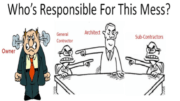
The schedule can slip even when the architect, contractor, and consultants are doing exactly what they are supposed to do.
Originally published March 2012. Updated October 2026.
An owner sees a project falling behind and naturally starts asking what happened.
Did the architect miss something? Is the contractor understaffed? Are materials late? Is permitting taking longer than expected?
Sometimes.
But there is another place I would look.
What is the project waiting for from the owner?
Owners do not intentionally delay their own projects. More often, the organization is still making decisions while the project is already trying to execute them.
The program changes after design is underway. A budget problem reaches leadership only after pricing. Several people believe they have approval authority. Operations gets involved after something has already been designed. A preferred vendor appears after procurement has started.
Individually, none of these decisions may seem significant.
Collectively, they can consume a schedule.
The Owner Has a Schedule Too
Project schedules usually show design, permitting, procurement, construction, commissioning and turnover.
What they do not always show clearly enough is the owner’s work.
Someone has to approve the program.
Someone has to make decisions about cost and scope.
Someone has to reconcile competing stakeholder requirements.
Someone has to approve finishes, equipment, technology, furniture, security and operational requirements.
Those decisions have predecessors and successors just like construction activities do.
If the team needs an owner decision by Friday to release equipment with a 20-week lead time, Friday is not merely a requested response date.
It is a schedule milestone.
Missing it can move everything downstream.
Resolve the Big Conflicts Before They Become Field Problems
One of the most expensive places to discover that the owner’s expectations exceed the budget is during construction.
The same applies to unresolved operational requirements.
If the business wants one thing, the budget supports another, and leadership has not decided which takes priority, the design team can continue drawing.
But the conflict has not disappeared.
It has simply moved downstream.
The later that decision is made, the fewer options the project has and the more likely the answer involves redesign, change orders, expediting or schedule extension.
An owner should not wait for a bid or change order to reveal a disagreement that was already present during planning.
Know Who Can Make the Decision
A project can have plenty of meetings and still lack decision authority.
Who approves a change in scope?
Who can accept a cost increase?
Who decides when two departments want conflicting things?
Who can say:
“This is the decision. Proceed.”
If every significant issue has to travel through several layers of the organization, the project team needs to understand that process and build the required decision time into the schedule.
Better yet, establish the authority structure before those decisions arrive.
That does not mean every decision should be pushed to one person.
It means everyone should understand which decisions can be made at the project level, which require executive approval and how quickly those approvals can realistically occur.
Bring the Right People In Early
Facilities, operations, IT, security, finance, procurement, legal and the business itself may all have legitimate interests in the project.
That does not mean everyone needs to attend every meeting.
It does mean their requirements need to be identified early enough to influence the work without forcing it backward.
Operations may know that a piece of equipment cannot be shut down when the construction team expects.
IT may have infrastructure requirements that affect the design.
Security may have access-control requirements.
Procurement may have rules that affect how equipment or services can be purchased.
Finance may have requirements for approvals, commitments or reporting.
The worst time to discover one of those requirements is after the affected work has already been designed, purchased or installed.
Early involvement is not about creating a larger project committee.
It is about getting the right information at the point when the project can still use it.
Don’t Keep Changing the Question
Projects evolve. New information appears. Some changes are unavoidable.
But there is a difference between responding to new information and repeatedly reconsidering decisions that have already been made.
An organization can consume substantial schedule by continuing to revisit the program, layouts, standards or project objectives while the design team is trying to advance the work.
Sometimes the owner wants another study.
Then another option.
Then a comparison of the two options.
Then someone who was not involved earlier asks why a third option was never considered.
Analysis has value when it leads to a decision.
At some point, however, the owner has to decide.
Otherwise the project may remain busy without actually moving forward.
Don’t Introduce “Our Guy” After the Team Is Set
Owners frequently have existing relationships with contractors, vendors, consultants, equipment suppliers or service providers.
Those relationships can be valuable.
But if a preferred vendor is going to participate, identify that requirement before the team has designed around another solution or procurement has begun.
“Our guy does that” sounds simple.
It may not be simple after contracts have been awarded and responsibilities established.
The preferred vendor may need to coordinate with the design team.
Its equipment may have different infrastructure requirements.
Its scope may overlap with someone else’s contract.
Its pricing may need to fit the project’s procurement requirements.
And its schedule may not align with the project schedule.
The issue is not whether the owner should use preferred vendors.
It is whether the project knew about them early enough to plan accordingly.
Make Sure the Owner’s Team Can Read What It Is Approving
One point from the original version of this article is still important.
People inside the owner’s organization may understand the building or operation extremely well without being accustomed to reading construction drawings and specifications.
That distinction matters.
Someone can know an operation better than anyone on the project team and still miss something on a drawing because they do not work with construction documents every day.
Don’t simply send drawings to stakeholders and assume that silence means approval.
Help them understand what they are looking at.
Walk operations through the design.
Ask questions in terms of how the space or system will actually function.
Make sure the people who will inherit the finished project have a meaningful opportunity to identify problems before construction.
Their knowledge is valuable.
The project needs a process that allows them to apply it.
Treat Owner Decisions Like Project Deliverables
The project team tracks drawings, submittals, RFIs, procurement, inspections and construction activities.
Owner decisions deserve the same discipline.
For every consequential decision, the owner should know:
What needs to be decided?
Who owns the decision?
What information is required to make it?
When is the decision needed?
What happens if that date is missed?
That makes owner decision-making visible rather than allowing it to disappear inside meeting minutes and email chains.
It also changes the conversation when a schedule begins slipping.
Instead of simply asking why the contractor or design team is late, leadership can see what the entire project—including the owner organization—is waiting for.
The Owner Is Part of the Delivery System
None of this is about blaming the owner.
The owner is paying for the project and has every right to ask questions, challenge recommendations and make informed decisions.
But those decisions occur inside a schedule.
The design team cannot finalize something the owner has not decided.
Procurement cannot release something that has not been approved.
Construction cannot install something that is still being redesigned.
And the project cannot recover time simply because the delay originated on the owner’s side of the table.
When a project schedule starts slipping, ask about the contractor, the consultants, procurement and permitting.
Then ask one more question:
“What is the project waiting for from us?”
The answer may explain more of the schedule than anyone expected.
Leadership takeaway: If the project needs something from the owner to keep moving, put it on the schedule. Owner decisions, approvals, stakeholder requirements and procurement direction are project activities—not administrative side work.
About the Author: Richard Neuman advises organizations on capital planning, project governance, and complex capital programs. He has overseen more than $2 billion in capital investments across commercial real estate, healthcare, utilities, industrial, broadcast, and development projects.
He writes candidly from an owner-side perspective about the executive decisions and organizational dynamics that shape capital project outcomes.
Leading a major capital program or facing a complex capital decision?
Contact Richard.
Subscribe for insights on capital planning, project governance, and the executive decisions that shape project outcomes long before construction begins.


Great article.. The list should be given to all Owner’s at the start of their project.
Richard,
I enjoy reading your articles. Clearly, you have a wealth of experience in construction/project management and you’re a good writer as well.
Hope business is good.
Regards,
Warren
Warren, thank you for the kind words. I trust all is well and will see you at next week’s meeting.