
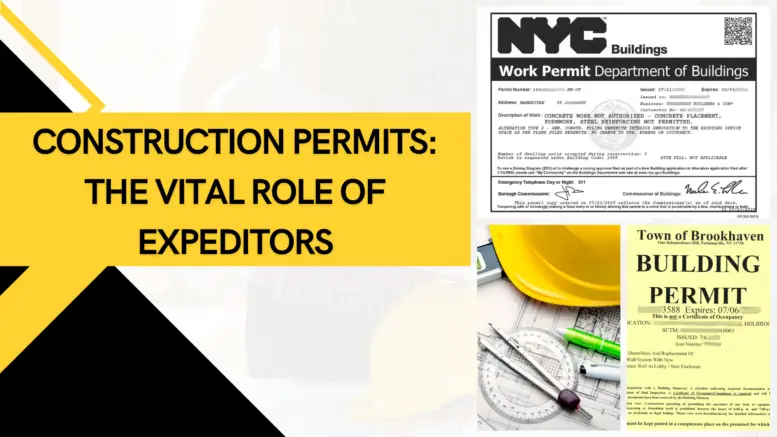
An expeditor can help navigate filings, agencies and approvals. But hiring one doesn’t transfer responsibility for getting the design permit-ready.
Construction permitting can look deceptively simple on a project schedule.
Complete the drawings. Submit them. Get the permit. Start construction.
Then the questions begin.
Which applications are required? Which agency reviews them? Are additional approvals needed? Who responds to comments? Who is tracking the filing? What has to happen before the contractor can pull the permit?
That is where a permit expeditor can become an important member of the project team.
But I would start by making one distinction clear:
An expeditor helps navigate the permitting process. The expeditor does not make the design approvable.
What Does an Expeditor Actually Do?
The exact role varies by jurisdiction and project, but an expeditor typically helps the project team manage the administrative side of permitting and approvals.
That may include coordinating applications and supporting documents, submitting or facilitating filings, tracking agency reviews, monitoring comments and objections, coordinating responses with the design team, following up on outstanding items, and helping the team understand the procedural requirements needed to move an application forward.
In New York City, the formal terminology includes Filing Representatives, and DOB NOW allows owners, design professionals, licensees and filing representatives to conduct many Department of Buildings transactions electronically. NYC Homeowner Help
For an owner, the value is not simply having someone submit paperwork.
It’s having someone who understands the process well enough to tell the team what needs to happen next.
The Expeditor Doesn’t Own the Design
This is where responsibilities can become blurred.
The architect and engineers remain responsible for their professional design work and for resolving design or code issues within their scopes.
If an agency objects to something in the drawings, the expeditor may identify the objection, help interpret the administrative path forward and coordinate the response.
But the design professional has to resolve the design issue.
That distinction matters when a project is behind schedule.
An owner may hear:
“The permit is still with the expeditor.”
That doesn’t tell me enough.
- What is actually holding it up?
- Is the application awaiting agency review?
- Did the agency issue comments?
- Does the architect owe a response?
- Is another consultant’s information missing?
- Does the owner need to make a decision?
- Is another approval required before this one can proceed?
“Permitting” is too broad a schedule activity to answer those questions.
Local Knowledge Matters
Permitting processes can be highly jurisdiction-specific.
New York City has a centralized Department of Buildings process, although a project may require involvement from other agencies depending on the work.
Long Island is different.
In Nassau County, building permits are generally handled by the applicable town, city or village rather than by the county itself. County involvement may still be required for matters such as county roads, sewers or other specific approvals. Nassau County
Suffolk County projects can similarly require coordination between local municipalities and county agencies for certain conditions. For example, work affecting a county right-of-way can require county review coordinated with the local town or village. Suffolk County Government
That makes local experience valuable.
An expeditor who regularly works in the applicable jurisdiction may understand the filing procedures, sequencing and administrative expectations that a project team unfamiliar with that municipality could otherwise have to learn along the way.
Bring the Expeditor in Before You Need the Permit
One of the most useful things an expeditor can do happens before the application is submitted.
I would rather have the team understand the permitting path while the project schedule is being developed than discover it after the drawings are supposedly ready to file.
- What approvals are expected?
- Which can run concurrently?
- Which depend on another approval?
- What documentation will be required?
- Who is responsible for preparing it?
- When should the filing occur?
- Are there long-lead approvals that need to start earlier than the primary building permit?
Those questions can affect the design and construction schedule.
If the expeditor is first called after the application has stalled, the project has already lost one of the benefits the role can provide.
Filing the Application Isn’t the Milestone That Matters
Project schedules sometimes include a milestone called “Submit for Permit.”
That’s useful, but it isn’t the finish line.
For the owner, I want to see the permitting path beyond submission.
The schedule should identify the anticipated review period, responses to comments or objections, resubmissions where required, related agency approvals, permit issuance and any subsequent inspections or approvals that affect occupancy or turnover.
While the details will vary by project and jurisdiction, the principle doesn’t.
Permitting needs to be managed as a process, not treated as a single date.
Ask What Is Actually Holding Up the Permit
Once an application is underway, status reporting should be specific.
“It’s at the building department” is not a useful project update.
I would want to know:
- What was submitted?
- When was it submitted?
- What is the current review status?
- Were comments or objections issued?
- Who owns each outstanding response?
- When is that response due?
- Are any other approvals preventing the permit from being issued?
- Is there anything the owner needs to decide or provide?
That turns permitting from a vague external dependency into something the project team can actually manage.
The agency’s review time may still be outside the team’s control.
The team’s readiness and response time are not.
An Expeditor Can’t Guarantee an Approval Date
Owners should also be realistic about what an expeditor can control.
An experienced expeditor may understand agency procedures, anticipate filing requirements and help prevent avoidable administrative delays.
- They cannot guarantee how quickly an agency will complete its review.
- They cannot guarantee that the design will be approved as submitted.
- And they cannot eliminate a legitimate code, zoning or regulatory issue by pushing the paperwork harder.
A good expeditor helps the project navigate the process efficiently.
That is different from controlling the process.
The Owner Still Needs One Permit Strategy
On a complex project, permits and approvals can involve multiple design professionals, contractors, agencies and jurisdictions.
Someone on the project team needs to see the complete picture.
Before construction depends on an approval, I want to know:
What approvals do we need, who owns each one, when do we need it, and what could prevent us from getting it?
The expeditor can be extremely valuable in answering those questions.
But the permitting strategy still needs to be integrated with the owner’s overall design, procurement and construction schedule.
Leadership Takeaway: Engage the expeditor early enough to help define the permitting path, then manage permits as a series of responsibilities and decisions rather than a single submission date. The expeditor can navigate the process and keep it moving, but the project team still owns the design, the responses and the information required to obtain approval.
About the Author: Richard Neuman advises organizations on capital planning, project governance, and complex capital programs. He has overseen more than $2 billion in capital investments across commercial real estate, healthcare, utilities, industrial, broadcast, and development projects.
He writes candidly from an owner-side perspective about the executive decisions and organizational dynamics that shape capital project outcomes.
Leading a major capital program or facing a complex capital decision?
Contact Richard.
Subscribe for insights on capital planning, project governance, and the executive decisions that shape project outcomes long before construction begins.




Be the first to comment on "What Can a Permit Expeditor Actually Do for Your Project?"