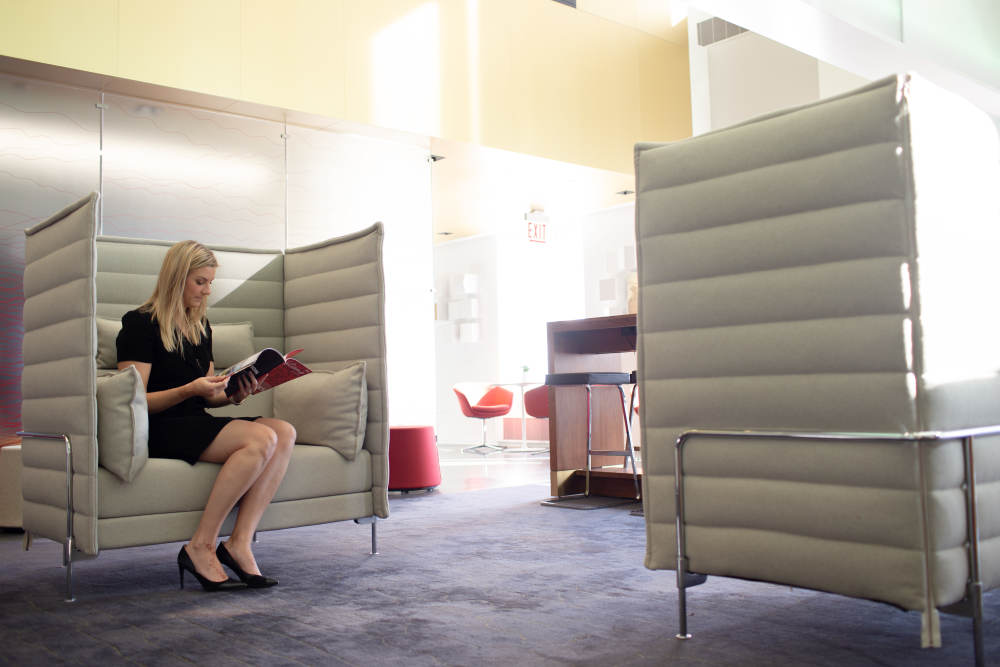
High ceilings, large floor plates and exposed structure can make an industrial building attractive. They don’t tell you whether it will make a good office, studio or other new use.
Originally published in the Hauppauge Reporter, March 2019. Updated September 2026 with an owner-side perspective on adaptive reuse.
Industrial buildings can present compelling redevelopment opportunities.
Large floor plates.
High ceilings.
Robust structure.
Open interiors.
Loading access.
And sometimes a character that would be expensive to reproduce in new construction.
It’s easy to walk into one and see possibilities.
The owner needs to ask a harder question:
“What can this building actually support?”
Because converting an industrial property isn’t simply a matter of putting a new interior inside an old shell.
Start With What You’re Really Reusing
The economics of adaptive reuse depend partly on how much of the existing asset has value for the proposed use.
The structure may be valuable.
The floor-to-floor height may be excellent.
The roof may have years of useful life remaining.
The utility service may be adequate.
Or the project may discover that much of what appeared reusable needs substantial modification or replacement.
Before treating the existing building as an advantage, understand what you’re actually keeping.
The Original Building Was Designed for a Different Job
An industrial building may have been designed around manufacturing, warehousing or distribution.
The proposed use may require something entirely different.
Office users may need substantially different ventilation, daylight, plumbing, electrical distribution and life-safety systems.
A studio or production facility may introduce acoustic, vibration, structural and power requirements.
Laboratory or technical uses can create still another set of demands.
The building doesn’t become suitable merely because the new use physically fits inside it.
The Floor Plate Can Be an Asset—or a Problem
Large floor plates are often marketed as an advantage.
Sometimes they are.
But depth matters.
A very deep building can make daylight penetration difficult. Interior areas may require different planning strategies. Egress distances, restroom distribution and circulation can influence how efficiently the floor can actually be used.
The owner should evaluate usable planning efficiency, not simply total square footage.
A 100,000-square-foot building isn’t necessarily a 100,000-square-foot opportunity.
Building Systems Can Change the Economics
Existing MEP infrastructure deserves early attention.
- How much electrical capacity is available?
- Can the HVAC system support the new occupancy?
- Where can outside air be introduced?
- Is there sufficient plumbing capacity?
- What fire protection changes are required?
- Can new equipment be placed where it needs to go?
These questions can materially change the conversion budget.
An inexpensive building can become an expensive project when the infrastructure required by the new use is substantially different from what the property was built to support.
Code and Zoning Need to Be Tested Early
A change in use can trigger requirements that weren’t relevant to the original building.
Occupancy classification.
Egress.
Accessibility.
Fire protection.
Energy requirements.
Parking.
Zoning.
Structural loads.
The exact implications depend on the building, jurisdiction and proposed use.
The important owner-side point is simpler:
Don’t develop the business case before understanding the approval path.
A concept that works beautifully on a floor plan may become very different once regulatory requirements are applied.
Character Has Value—But It Isn’t the Business Case
Exposed structure, high ceilings and industrial materials can create spaces with character.
That can matter.
A distinctive environment may support leasing, branding, employee experience or market positioning.
But those benefits need to be considered alongside the cost of achieving the conversion.
The objective isn’t to preserve industrial character at any price.
It’s to determine whether the attributes worth preserving create enough value to justify working within the constraints of the existing building.
Test the Building Before Falling in Love With the Concept
Adaptive reuse can create exceptional projects.
It can also create projects where the owner spends heavily overcoming conditions that were visible from the beginning.
Before committing to the concept, test the fundamentals:
- structure;
- building envelope;
- MEP capacity;
- floor-plate efficiency;
- code and zoning;
- access and logistics;
- environmental conditions; and
- the requirements of the proposed use.
Then compare those findings with the alternative.
Sometimes conversion wins.
Sometimes substantial reconstruction wins.
Sometimes replacement does.
The existing building deserves neither automatic preservation nor automatic demolition.
It deserves analysis.
Leadership takeaway: The value of an industrial conversion isn’t the building you acquire. It’s the useful structure, infrastructure and characteristics you can retain while still delivering what the new use requires.
About the Author: Richard Neuman advises organizations on capital planning, project governance, and complex capital programs. He has overseen more than $2 billion in capital investments across commercial real estate, healthcare, utilities, industrial, broadcast, and development projects.
He writes candidly from an owner-side perspective about the executive decisions and organizational dynamics that shape capital project outcomes.
Leading a major capital program or facing a complex capital decision?
Contact Richard.
Subscribe for insights on capital planning, project governance, and the executive decisions that shape project outcomes long before construction begins.




Be the first to comment on "Technology, Creative Firms Flock to Converted Industrial Spaces"