
A protective device that repeatedly trips may be doing exactly what it was designed to do.
GFCI, or Ground-Fault Circuit Interrupter, protection is designed to reduce the risk of electrical shock by quickly interrupting power when it detects an imbalance in electrical current.
You commonly see GFCI-protected receptacles in locations where electrical equipment may be exposed to water or other conditions that increase shock risk. Exactly where GFCI protection is required depends on the applicable electrical code, occupancy, location and equipment involved.
But there is another issue that matters in an operating workplace:
What happens when the GFCI keeps tripping?
A Trip Is Different From an Overloaded Circuit
A tripped GFCI is not necessarily the same thing as a circuit breaker tripping because too much electrical load has been placed on a circuit.
A GFCI monitors current and interrupts power when it detects a potentially unsafe difference between the current leaving and returning through the circuit.
That distinction matters.
If a GFCI repeatedly trips when a particular appliance or piece of equipment is connected, resetting it over and over does not resolve whatever is causing the condition.
 Test and Reset Are There for a Reason
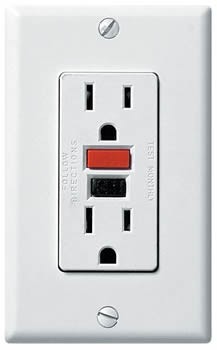
GFCI receptacles typically include TEST and RESET buttons.
The TEST function is intended to verify that the device can interrupt power. The RESET button restores power after the device has tripped or been tested, assuming conditions allow it to reset.
Testing and maintenance should follow the device manufacturer’s instructions and applicable facility procedures.
If the device will not reset, repeatedly trips, appears damaged or behaves unexpectedly, the issue should be evaluated by qualified personnel.
Don’t Create a Workaround
This is where a small facilities issue can become a larger safety problem.
Someone needs the coffee maker, appliance or other equipment to work. The protected receptacle keeps tripping. Eventually, someone decides to plug the equipment into a different outlet.
The equipment works.
That doesn’t mean the problem was solved.
The issue could involve the equipment, the receptacle, the circuit or another electrical condition that requires investigation.
Moving the equipment somewhere else simply because the protective device keeps operating can bypass the warning without addressing its cause.
Treat Repeated Trips as Information
One nuisance trip may be quickly resolved.
A recurring condition deserves attention.
Document where it is occurring, what equipment is connected and whether the same condition occurs repeatedly. That information can help building engineering or a qualified electrician determine what is actually happening.
The objective isn’t to keep resetting the protection until the equipment stays on.
It’s to understand why the protection operated in the first place.
Leadership Takeaway: When a safety device repeatedly interrupts operation, don’t treat the device as the problem. Find out what condition it is detecting before someone creates a workaround.
About the Author: Richard Neuman advises organizations on capital planning, project governance, and complex capital programs. He has overseen more than $2 billion in capital investments across commercial real estate, healthcare, utilities, industrial, broadcast, and development projects.
He writes candidly from an owner-side perspective about the executive decisions and organizational dynamics that shape capital project outcomes.
Leading a major capital program or facing a complex capital decision?
Contact Richard.
Subscribe for insights on capital planning, project governance, and the executive decisions that shape project outcomes long before construction begins.



Be the first to comment on "GFCI Outlets in the Workplace: When a Reset Doesn’t Solve the Problem"