
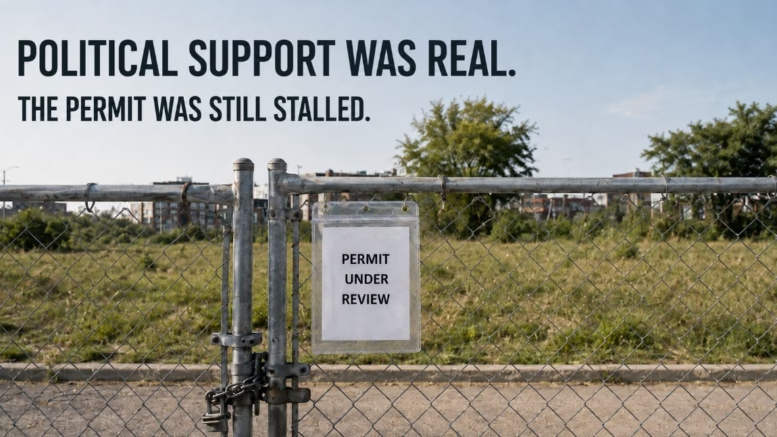
Political support, experienced attorneys, and well-connected expediters were expected to compress the building-permit schedule. Nobody could identify which review would move faster.
“We have the right team.”
The lobbyist knew the elected officials. The land-use attorney knew the agencies. The expediter knew the building department. The architect had taken projects through the municipality before. The owner had relationships at the highest levels of local government.
On paper, it looked like exactly the team you would assemble if you wanted approvals to move faster.
Everyone expected the approvals to move quickly.
They took years.
One of the most expensive misconceptions in permitting is the belief that access can substitute for process.
The building commissioner eventually spoke with commission staff. The commission raised no objections.
By then, the application had already spent years in site-plan review. Whatever value that conversation produced, it arrived after the delay the owner had expected the connected team to prevent.
The Relationships Entered the Schedule
Project teams rarely put a task labeled “political influence” on the Gantt chart. The schedule reflects the owner’s expectation anyway. Review periods are shortened, fewer resubmissions are carried, and aggressive approval dates are set.
When questions about permitting risk came up, people answered with names instead of process steps.
“The supervisor supports the project.”
“The commissioner understands how important this is.”
“Someone will make a call if it gets stuck.”
In some project rooms, “we know the right people” functions less as a plan than as a substitute for one.
Politically connected advisers can become schedule insurance in an owner’s mind. Access blurs into influence. The owner feels protected, the advisers seem influential, and the schedule keeps its aggressive date.
The owner’s own relationships can create the same confidence. The owner’s history of civic and political involvement in the county became another reason the project team expected access.
“I’ll look into it” may produce a status inquiry or identify who holds the file. It may also end with the same answer the project team already had: the application remains under review. Unless the inquiry produces a defined decision, commitment, or next step, it has not changed the schedule.
That confidence becomes a scheduling blinder. Normal review durations begin to look padded. Resubmission allowances disappear. Approval dates get pulled forward.
Nobody identifies which review will move faster, which submission cycle will disappear, what the promised call will change, or how many days the relationships will save.
If a relationship is expected to shorten the schedule, the team should be able to point to the exact review, decision, or submission cycle it will affect and explain how much time it is expected to save.
Not every benefit can be measured in days. A relationship may surface an issue before filing, resolve a misunderstanding before it becomes a formal objection, or identify political opposition while the project can still respond. Those benefits belong in the approval strategy and risk register. They should not become unsupported schedule compression.
As the process drags on, the exasperated owner looks at the team and asks:
“What are we paying all these so-called ‘connected’ people for?”
The invoices keep arriving. The approval date keeps moving.
The owner had spent millions on the advisers and technical team, believing the right combination of money, political support, experience, and connections had purchased a faster approval. Nobody could identify the time it had purchased.
Lobbyists provide political intelligence and advocacy. Land-use attorneys establish the approval path. Expediters manage filings and communication. Those services have value. Their authority ends where the municipality’s begins.
Owners can demand evidence of performance: complete applications, prompt responses to comments, anticipated objections, purposeful meetings, tracked commitments, and consistent follow-up. They should know what each consultant is expected to deliver and which part of the process each one can influence.
The clearest visible use of those relationships came only after the technical review was complete.
What the Team Actually Committed To
On one project, an expediter expected to see the chief plan examiner later that week about another application. She said she would ask about ours while she was there.
Then she added:
“I don’t want to push them too hard.”
Her relationship with the municipality was a professional asset extending across many clients, applications, and years of future business. She had to preserve that access while deciding how aggressively to press on any single application.
For our project, she committed to making a limited inquiry while attending a meeting about someone else’s application. There was no dedicated escalation, requested decision, commitment date, or agreed next step.
The owner believed he had hired an expediter with influence, and the schedule assumed that influence would translate into speed. In practice, the commitment amounted to: “I’ll ask about it.”
That limitation never appeared in the schedule.
On another project, a different expediter walked me through every submission, response, resubmission, and municipal action. We assigned realistic durations to each step. Some individual reviews required four to six weeks each. Others required twelve weeks each. The environmental review was expected to take a year or more.
The owner expected political influence to shorten those durations. The expediter encouraged me to carry them as given.
Every duration had a basis. When someone pushed for an earlier date, we could point to the review underway, the work remaining, and the next decision required.
His durations proved accurate. His most valuable contribution was an honest schedule.
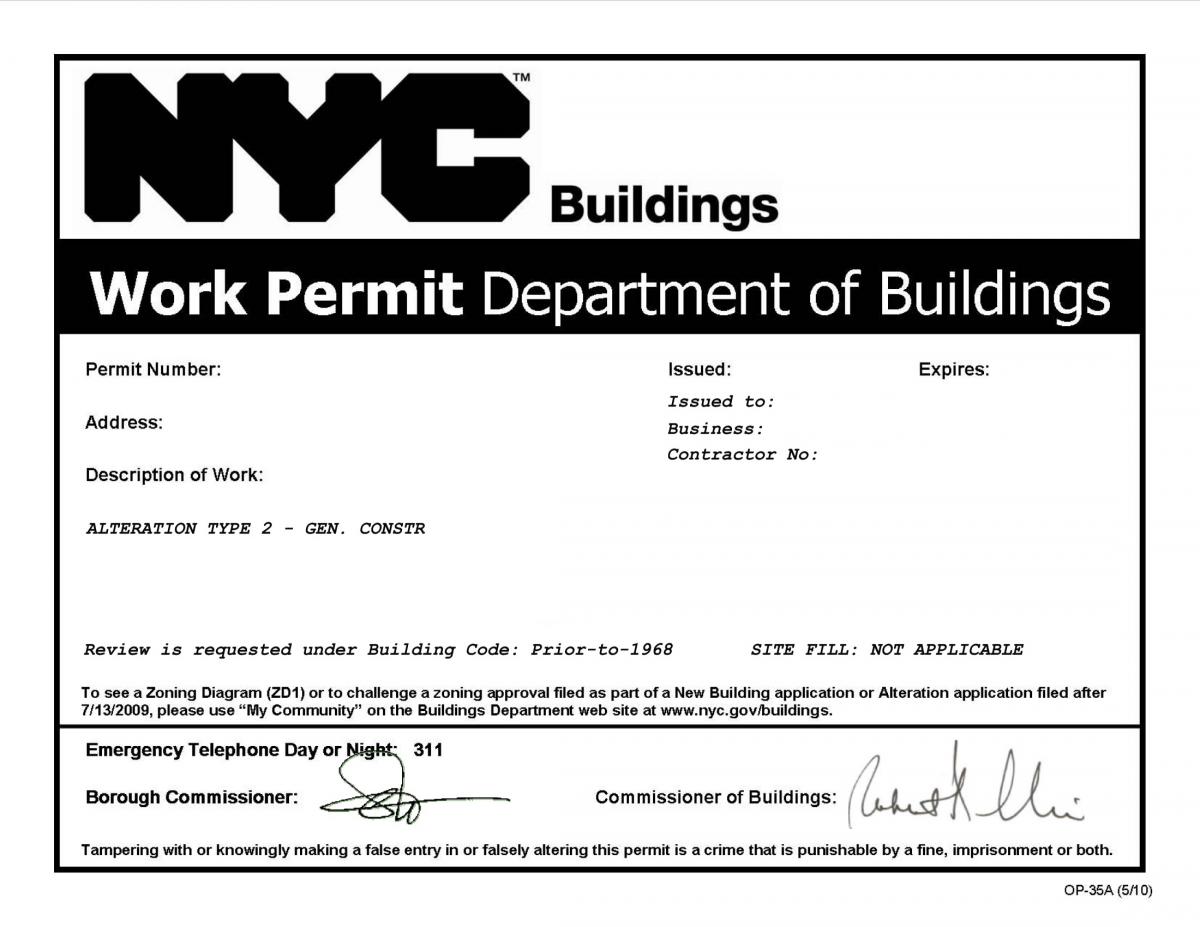
In New York City, relationships may help identify the right person, clarify an unusual objection, arrange a meeting, or escalate a stalled filing. For applications proceeding through DOB NOW, any resolution affecting the filing ultimately has to be reflected in the official record before the application can advance.
The Technical Reviews Kept Their Own Clocks
A third-party consultant retained by the municipality to review the site plan found a drainage problem, an incomplete traffic analysis, and an inconsistency between the engineering documents.
Comments were issued. Drawings were revised. New questions opened another submission cycle.
The review continued long enough that the Phase I and Phase II environmental reports were no longer accepted as current. The studies had to be repeated before the application could advance.
The municipality’s consultant was reviewing the technical work under a professional license. Any recommendation had to be supported by the calculations, drawings, and application record.
The building department may be only one stop in the approval process. The health department, fire marshal, Department of Transportation, Department of Public Works, and other municipal, county, and state entities may each have separate reviews, comment cycles, dependencies, and approval dates.
A relationship inside one department does not control another agency’s schedule. One unresolved review can still prevent the application from advancing.
A phone call might get someone to pull the file from the stack. It wasn’t going to solve the drainage calculations, fix the traffic analysis, or reconcile conflicting engineering documents.
Each remaining technical review continued on its own timetable.
The Public Process Has Its Own Clock
In New York City, ULURP routes land-use applications through community boards, borough presidents, the City Planning Commission, and the City Council. Long Island relies on its own gauntlet of planning, zoning, and town boards—punctuated by public hearings and civic pushback.
Political access cannot bypass the public square. A sharp lobbyist might map the political landscape, but organized community opposition—from traffic concerns to outright NIMBY resistance—is not a fixed-duration risk. It triggers new studies, required redesigns, extra hearings, and years of delay.
On Long Island, the familiar refrain is “nothing ever gets built here.” Behind that cynicism are real disputes over density, infrastructure, and neighborhood character that no political relationship can wave away. Some projects never recover, and developers eventually walk away.
Community response is not a fixed-duration task on a Gantt chart. It can create its own schedule—and sometimes its own dead end.
What the Owner Can Reasonably Expect
Owners can demand performance from the lobbyists, attorneys, expediters, architects, and consultants they pay.
They can demand a clear approval strategy, complete submissions, prompt responses to comments, purposeful escalation, and an honest schedule.
Money spent on connected advisers does not create an entitlement to a faster municipal review. Political relationships, support, or contributions provide no dependable claim to preferred treatment or a particular approval date.
Relationships can create several kinds of value. They can lead to a specific action that genuinely shortens the approval process, reduce risk without measurable time savings, or simply provide access and credibility.
The team should document each benefit for what it is. Only a defensible schedule intervention should shorten an approval duration.
Before shortening an approval activity, ask four questions:
-
Which specific step will move faster?
-
Who will take the action?
-
What outcome is expected?
-
Exactly how many days will it save?
If the team cannot answer, carry the full duration.
The owner can know the building commissioner, the borough president, the town supervisor, or the mayor. The consultants can have relationships throughout the municipality.
Money spent on connected advisers may provide access. It cannot relieve licensed professionals of their responsibilities or bypass a required approval process.
The schedule still has to know the process.
In permitting, the process is the schedule.
About the Author: Richard Neuman advises organizations on capital planning, project governance, and complex capital programs. He has overseen more than $2 billion in capital investments across commercial real estate, healthcare, utilities, industrial, broadcast, and development projects.
He writes candidly from an owner-side perspective about the executive decisions and organizational dynamics that shape capital project outcomes.
Leading a major capital program or facing a complex capital decision?
Contact Richard.
Subscribe for insights on capital planning, project governance, and the executive decisions that shape project outcomes long before construction begins.
Be the first to comment on "Knowing the Building Commissioner Didn’t Speed Up the Permit"