
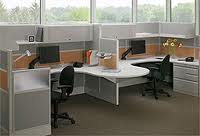
Existing furniture may look like an obvious asset during a relocation. Reusing it still has to work with the new space, schedule, technology and cost.
Originally published August 2011. Updated September 2026 to reflect current owner-side relocation and furniture planning considerations.
When an organization is moving, someone will eventually ask:
“Why don’t we just take the furniture with us?”
It’s a reasonable question.
The company already owns it. It may still be in good condition. Reusing it avoids buying everything again.
But ownership doesn’t make furniture free to reuse.
It has to be inventoried, disassembled, moved, reconfigured and reinstalled. It also has to fit the new workplace and coordinate with the systems around it.
Before assuming the existing furniture is an asset to the new project, I would ask a different question:
“What does keeping it require us to do?”
Start With the New Space, Not the Old Furniture
A relocation creates an opportunity to reconsider how the organization uses space.
The new office may have different floor plates.
Different column spacing.
Different headcount assumptions.
Different work patterns.
Different collaboration requirements.
Different technology.
Furniture that worked well in the existing office may constrain the new plan if the design is forced to accommodate it.
That doesn’t mean it should be discarded.
It means the new workplace shouldn’t automatically be designed around yesterday’s furniture.
Inventory What You Actually Have
Before comparing reuse with replacement, establish what is available.
- What systems and manufacturers are represented?
- How old are they?
- What condition are they in?
- Are replacement parts still available?
- Are components interchangeable?
- How much inventory is actually usable?
- Can the existing furniture support the configurations being considered for the new space?
A furniture inventory is more than a count of desks and chairs.
It establishes what the project can realistically reuse.
Understand the Cost of Reuse
Existing furniture may have no acquisition cost, but reuse has other costs.
Systems furniture may need to be:
- dismantled;
- packed and transported;
- stored;
- cleaned or repaired;
- refinished;
- supplemented with additional components;
- reconfigured; and
- reinstalled.
There may also be costs associated with electrical and data connections, new work surfaces, replacement panels or components that no longer match the available inventory.
The appropriate comparison isn’t:
Existing furniture versus new furniture.
It’s:
Total cost of making the existing furniture work versus the total cost and value of the alternatives.
Test It Against the Schedule
Furniture decisions can affect the relocation sequence.
If employees remain in the existing office until shortly before the move, the furniture may not be available early enough to install in the new space.
That can create a logistical problem:
The old office needs the furniture to remain operational.
The new office needs the same furniture installed before employees arrive.
The project may require phased moves, temporary furniture, storage or a compressed dismantle-and-reinstall period.
Those requirements belong in the project schedule—not in a furniture discussion held a few weeks before move-in.
Coordinate Furniture With Power and Technology
Workstations aren’t isolated objects.
They may interact with electrical distribution, data cabling, monitors, audiovisual systems and other workplace technology.
Changing the furniture configuration can change where those services need to go.
Reusing existing systems without confirming those interfaces can create late coordination problems between the furniture vendor, electrician, technology team and construction documents.
Furniture planning needs to happen early enough for those systems to be coordinated.
Refurbished Furniture Can Be Part of the Answer
The decision doesn’t have to be limited to keeping everything or buying everything new.
Refurbished furniture can sometimes fill gaps in an existing inventory or provide another alternative when new furniture isn’t justified.
Likewise, an owner may reuse certain components, refurbish others and purchase new furniture where the workplace requirements have changed.
The best answer may be a combination.
What matters is that the combination is deliberate.
Don’t Forget What Happens to What You Don’t Keep
If furniture won’t be reused, decide what happens to it.
Can it be sold?
Donated?
Transferred elsewhere in the organization?
Recycled?
Does it require disposal?
Who is responsible for removing it, and when?
Furniture left behind can become a schedule and closeout issue if disposition isn’t assigned early enough.
Make the Decision Before the Floor Plan Hardens
The worst time to decide whether furniture will be reused is after the workplace has already been designed.
By then, the dimensions, electrical distribution, technology coordination and construction documents may already assume a particular furniture solution.
The owner should establish the furniture strategy while the space plan is still flexible enough to respond to it.
Reuse may be the right decision.
New furniture may be the right decision.
A combination of existing, refurbished and new may be better than either.
But the answer should come from evaluating the new workplace, not simply from the fact that the old furniture is already paid for.
Leadership takeaway: Existing furniture isn’t free just because you own it. Evaluate reuse against the new workplace, total installed cost, schedule and coordination requirements before designing around it.
About the Author: Richard Neuman advises organizations on capital planning, project governance, and complex capital programs. He has overseen more than $2 billion in capital investments across commercial real estate, healthcare, utilities, industrial, broadcast, and development projects.
He writes candidly from an owner-side perspective about the executive decisions and organizational dynamics that shape capital project outcomes.
Leading a major capital program or facing a complex capital decision?
Contact Richard.
Subscribe for insights on capital planning, project governance, and the executive decisions that shape project outcomes long before construction begins.



Be the first to comment on "Should You Move the Existing Office Furniture?"