
The calendar is only one input. Equipment condition, operating environment and the consequence of failure should determine the maintenance strategy.
Originally published October 2012. Updated October 2026 to reflect current owner-side maintenance and asset-management practices.
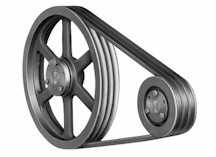
Part of routine building maintenance is inspecting and replacing the belts that drive rooftop fans and other belt-driven equipment.
The obvious question is:
How often should they be replaced?
It’s tempting to answer with a fixed interval—inspect them monthly, replace them annually and move on.
But that treats every piece of equipment as though it operates under the same conditions and carries the same consequence if it fails.
It doesn’t.
Start With the Equipment
Fan belts operate under different loads, temperatures, operating hours and environmental conditions.
A belt serving equipment that runs continuously may experience very different wear from one operating intermittently. Exposure to heat, dirt, moisture, grease or other contaminants can also affect belt life.
Manufacturer recommendations should establish the starting point for the maintenance program, but routine inspection tells you what is actually happening in the field.
Items worth examining include:
- cracking, glazing, fraying or other visible belt deterioration;
- belt tension;
- unusual vibration or noise;
- pulley and sheave condition;
- alignment;
- signs of uneven wear; and
- evidence that the belt is slipping or no longer transmitting power properly.
Simply installing a new belt doesn’t necessarily solve the underlying problem.
If pulleys are misaligned, bearings are deteriorating or belt tension is incorrect, the replacement belt may experience the same premature wear.
Not Every Fan Has the Same Consequence of Failure
This is where a maintenance question becomes an asset-management question.
What happens if the fan stops?
A general exhaust fan serving a noncritical area may create an inconvenience until repairs can be made.
A fan supporting a critical process, occupied environment or other important building function may create a much greater operational problem.
Some equipment has redundancy.
Some doesn’t.
Some belts can be reached and replaced easily during normal working hours.
Others may require roof access, special coordination, shutdowns or emergency service.
Those differences should affect how the equipment is maintained.
The replacement decision should consider not only the probability of failure, but the consequence of failure.
Condition-Based Doesn’t Mean “Wait Until It Breaks”
There is an important distinction between condition-based maintenance and run-to-failure maintenance.
Condition-based maintenance means inspecting equipment often enough to identify deterioration before failure and using that information—along with manufacturer guidance, operating history and equipment criticality—to determine when intervention is appropriate.
Waiting for a belt to break is something else entirely.
For equipment where failure would create significant operational consequences, planned replacement may be appropriate even when a belt still appears serviceable.
For less critical equipment, inspection and condition may support a different maintenance interval.
The point isn’t that one approach is universally better.
It’s that the maintenance strategy should reflect the equipment being maintained.
Look at the History
Maintenance records can tell you something a generic replacement interval cannot.
If the same fan repeatedly requires belts, that should raise another question:
Why?
The issue may not be the belt.
Repeated failures can point toward alignment, tension, pulley condition, bearings, vibration, operating conditions or another mechanical issue that deserves investigation.
Replacing the belt each time may restore operation without correcting the cause.
A useful maintenance program should therefore capture more than the fact that a work order was closed.
It should help identify recurring failure patterns.
Maintenance Frequency Should Reflect Risk
A basic inspection routine may include regularly walking past operating equipment, listening for unusual noise, observing vibration and checking visible condition.
More detailed preventive maintenance can then be scheduled according to the equipment, manufacturer’s recommendations, operating environment and facility requirements.
For owner-side leadership, the larger question is whether the maintenance program distinguishes between equipment based on condition, criticality and consequence rather than treating every asset identically.
That doesn’t require turning a fan belt into an engineering study.
It requires knowing which failures matter.
A replacement belt is inexpensive.
An unexpected equipment shutdown, emergency service call or disruption to an important building operation may not be.
So rather than asking only:
“How often do we replace the belt?”
I would also ask:
“What happens if we don’t replace it before it fails?”
The answer to that question should help determine the maintenance strategy.
About the Author: Richard Neuman advises organizations on capital planning, project governance, and complex capital programs. He has overseen more than $2 billion in capital investments across commercial real estate, healthcare, utilities, industrial, broadcast, and development projects.
He writes candidly from an owner-side perspective about the executive decisions and organizational dynamics that shape capital project outcomes.
Leading a major capital program or facing a complex capital decision?
Contact Richard.
Subscribe for insights on capital planning, project governance, and the executive decisions that shape project outcomes long before construction begins.



Be the first to comment on "How Often Should Rooftop Fan Belts Be Replaced?"