
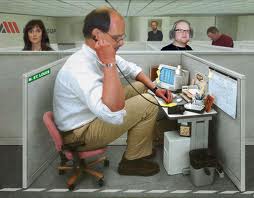
Shared workspaces can reduce the need for dedicated desks, but only if the workplace supports how people actually use them.
Originally published January 26, 2012. Updated October 2026 to reflect the evolution of hoteling, hot desking and hybrid work.
For the mobile or hybrid worker who doesn’t need a permanent office or cubicle, coming into the office can feel a little like the annual visit to your cousin’s house: you’re welcome, but you don’t necessarily have a place of your own.
You don’t want employees wandering around looking for an empty desk or setting up wherever they can find a chair.
That’s where hoteling and hot desking come in.
Hoteling generally refers to reservation-based unassigned seating. An employee reserves a workspace before coming into the office.
Hot desking is also unassigned seating, but typically without a reservation. Employees use an available workspace when they arrive.
When I originally wrote this article in 2012, these approaches were primarily solutions for mobile and telecommuting employees who didn’t need permanent desks.
Today, hybrid work has made the same question much larger:
How many desks does the office actually need?
Hoteling can help manage the answer, but it doesn’t determine it.
Furniture and Technology Still Matter
Getting your work done is not just about having a desk.
Shared workspaces need appropriate furniture, power, monitors, connectivity and whatever other technology employees require to work effectively.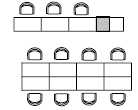
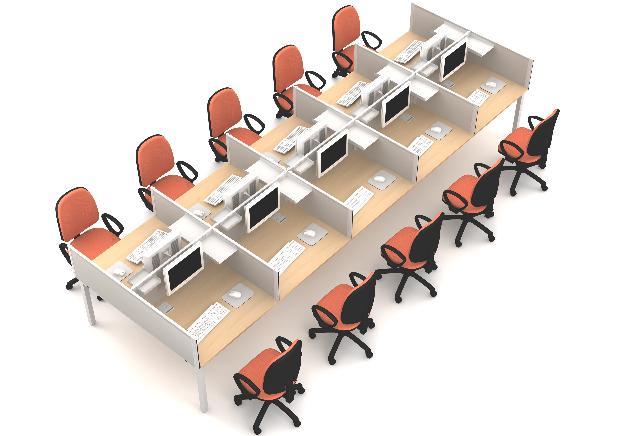
Consistency matters too. An employee shouldn’t have to figure out a different setup every time they reserve a workstation.
Think About the Peak Day
An office may average 50% attendance and still run out of desks on Tuesday morning.
That’s why planning shared workspace around average occupancy alone can be misleading.
The question isn’t simply how many people work remotely.
It’s how many people are likely to arrive at the same time.
Don’t Forget Storage
One warning from the original article hasn’t changed.
If a hoteling space isn’t regularly used, keep an eye on it. An unassigned workstation has a remarkable ability to become someone’s unofficial storage area.
Shared space only remains shared if someone manages it that way.
Hoteling and hot desking can make office space more flexible and efficient.
But the reservation system is the easy part.
The harder question is deciding how much space the organization actually needs and making sure it works on the days people choose to use it.
About the Author: Richard Neuman advises organizations on capital planning, project governance, and complex capital programs. He has overseen more than $2 billion in capital investments across commercial real estate, healthcare, utilities, industrial, broadcast, and development projects.
He writes candidly from an owner-side perspective about the executive decisions and organizational dynamics that shape capital project outcomes.
Leading a major capital program or facing a complex capital decision?
Contact Richard.
Subscribe for insights on capital planning, project governance, and the executive decisions that shape project outcomes long before construction begins.



Two Q’s – (1) Any recommendation on tools/ solutions for implementing a hotel reservation based system? (2) Which corporate functions would you recommend hoelling versus hot desking vice versa?
Hi Irene, great questions.
There are so many software packages on the market that can perform space management and employee scheduling. If you go to http://www.ifma.org and type the word “hoteling” in the search bar, it will bring up some robust packages.
As to corporate functions of hoteling vs desking, it’s very effective in rotating call centers or where several employees are never in the office simultaneously. But it’s tough to guide you without firsthand knowledge of your business, workflow, scheduling and shifts.
You may want to pose the question in a LinkedIn facilities group to see if other FM’s have deployed the strategy by function. If you don’t belong to any, I’d be happy to post on your behalf and report back any replies.
Good info.
Why is it aka hotelling?
It’s like Cancelled and Canceled. I never understood the difference. Some say two L’s vs. one L has much to do with US/Canada version and UK version of the word. Both are supposedly correct English and I do see both versions of the word used.
Very informative article
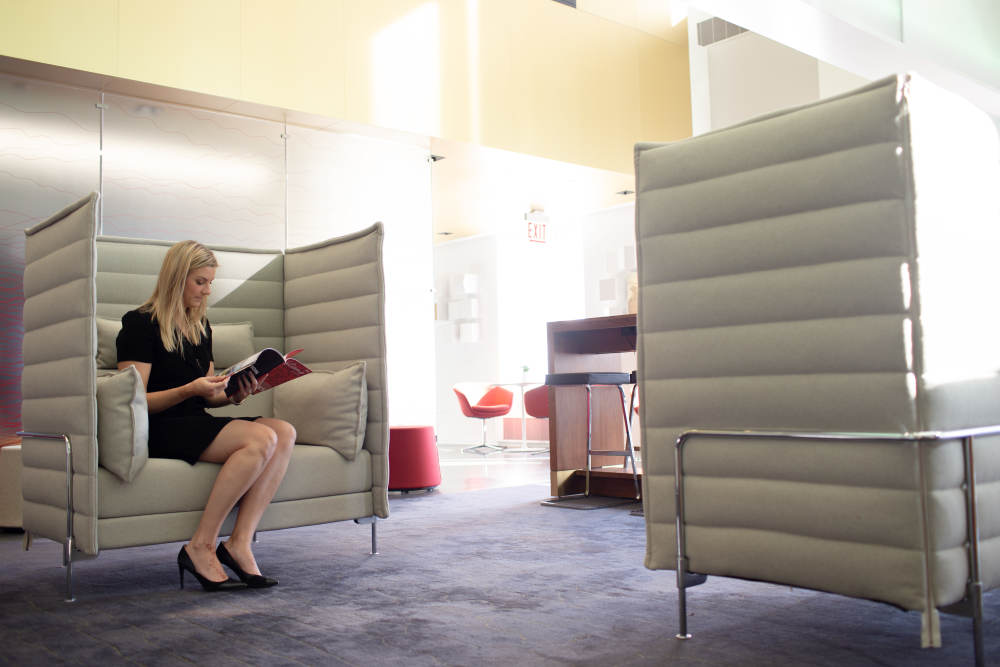
Regarding location of Hoteling / hot-space(s), place these in a location accessible to the work unit/group where the visiting employee would best serve his time spent in the office.
A common practice is to locate hotel/visitor work space next to high traffic aisles, informal meeting areas, or other distracting locations. This defeats the needs of the employee/visitor and their productivity would be compromised.