

Before allocating space to files, furniture, equipment and accumulated material, decide what actually needs to make the move.
Originally published January 2012. Updated October 2026.
An organization is preparing for a move or renovation.
Departments are asked what they need in the new space.
The answers start coming back.
Filing cabinets. Storage rooms. Shelving. Equipment. Furniture. Boxes of records.
The project team dutifully begins finding places for all of it.
I would ask a different question.
“Does all of this actually need to move?”
That question belongs much earlier in the project than the moving plan.
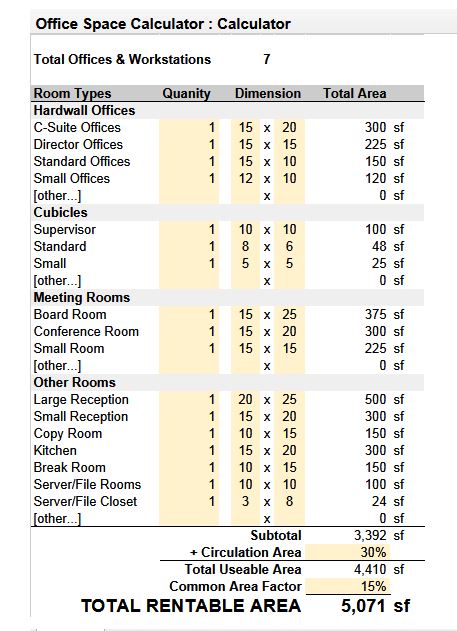
If the design team is told that a department needs 40 filing cabinets, those cabinets become a space requirement. Space requirements become square footage. Square footage affects design, construction cost and potentially the amount of real estate the organization leases or owns.
By the time someone finally asks whether those 40 cabinets are necessary, the project may already have designed around them.
Existing Conditions Are Not Automatically Requirements
One of the easiest ways to establish a program for new space is to document what exists today.
How many people?
How many offices?
How much storage?
What furniture and equipment?
What support spaces?
That information is important.
But an inventory of the existing operation is not the same thing as a definition of what the future operation requires.
A filing cabinet may exist because records must legally be retained.
Or it may contain material nobody has looked at in ten years.
A piece of equipment may support an important business function.
Or it may still be there because nobody has been responsible for deciding what to do with it.
A storage room may represent a legitimate operational requirement.
Or it may simply be where things accumulated because space was available.
The project team needs to understand the difference.
Every Item You Keep Has a Project Consequence
Things occupy space.
That sounds obvious, but the consequences extend beyond the moving truck.
Files require cabinets or shelving.
Cabinets and shelving require floor area.
High-density storage can introduce structural loading considerations.
Equipment may require electrical service, data, cooling or other infrastructure.
Furniture affects space planning.
Stored materials may require particular environmental, security or access conditions.
And everything that moves has to be packed, transported, placed and eventually managed again.
Individually, those decisions may seem minor.
Collectively, they can influence the size, cost and complexity of the project.
The question shouldn’t simply be whether something can fit in the new space.
The question is whether there is a business reason for it to be there.
Disposition Is an Owner Decision
The architect shouldn’t decide which business records can be destroyed.
The mover shouldn’t decide whether equipment is obsolete.
The project manager shouldn’t determine what documents have legal or regulatory retention requirements.
Those decisions belong with the appropriate people inside the organization.
Records management may need to establish retention requirements.
Legal may need to weigh in.
IT may need to determine how electronic equipment and data are handled.
Operations may need to determine what equipment remains necessary.
Individual departments may need to identify what they actually use.
The project team’s responsibility is to make sure those decisions are identified early enough to affect the project.
Without that process, the default answer becomes easy:
Move everything.
And once everything is assumed to be moving, the design begins accommodating it.
Don’t Wait Until Move Week
In the original version of this article, I recommended what I called an office “purge party.”
The terminology may sound dated, but the underlying idea still holds.
Give people a defined process and deadline for deciding what stays, what moves, what goes into storage and what can be disposed of.
The difference is that I would now treat that as a project workstream rather than a cleanup exercise.
Someone should own it.
Departments should understand what decisions they are responsible for making.
Records-retention and disposal requirements should be established.
IT and electronic equipment should have a disposition process.
Furniture and equipment should be evaluated before the new space is designed around them.
And the decisions need dates attached to them.
If disposition happens after design is substantially complete, the project has lost much of the benefit.
Challenge the Requirement Before Designing the Solution
This principle extends beyond filing cabinets.
A department may say it needs a storage room because it has always had one.
A team may request the same quantity of furniture because that is what exists today.
Equipment may be carried into the program even though replacement or consolidation is already being considered.
The project team can document those requests.
Owner-side leadership should help test them.
Why is this required?
How much is actually used?
What must be retained?
Could the requirement change before occupancy?
What happens if we don’t carry it into the new space?
Those questions are not about arbitrarily cutting scope.
They are about making sure the scope represents the organization’s future requirements rather than simply reproducing its past.
What Are You Really Moving?
A move creates an unusual opportunity to challenge what an organization has accumulated.
The objective isn’t to throw things away simply to save space.
It is to distinguish between what the organization has and what the organization needs.
Some records must be retained.
Some equipment absolutely needs to move.
Some storage is operationally necessary.
But those should be deliberate requirements rather than assumptions inherited from the existing space.
Once the design team starts allocating square footage around files, furniture, equipment and storage, yesterday’s accumulation can quietly become tomorrow’s capital requirement.
Leadership takeaway: Don’t ask the project team to design around everything the organization has today. Decide what actually needs to survive the move before it becomes part of the new project’s scope.
About the Author: Richard Neuman advises organizations on capital planning, project governance, and complex capital programs. He has overseen more than $2 billion in capital investments across commercial real estate, healthcare, utilities, industrial, broadcast, and development projects.
He writes candidly from an owner-side perspective about the executive decisions and organizational dynamics that shape capital project outcomes.
Leading a major capital program or facing a complex capital decision?
Contact Richard.
Subscribe for insights on capital planning, project governance, and the executive decisions that shape project outcomes long before construction begins.

Be the first to comment on "Are You Designing the New Space Around Things You Don’t Need?"