
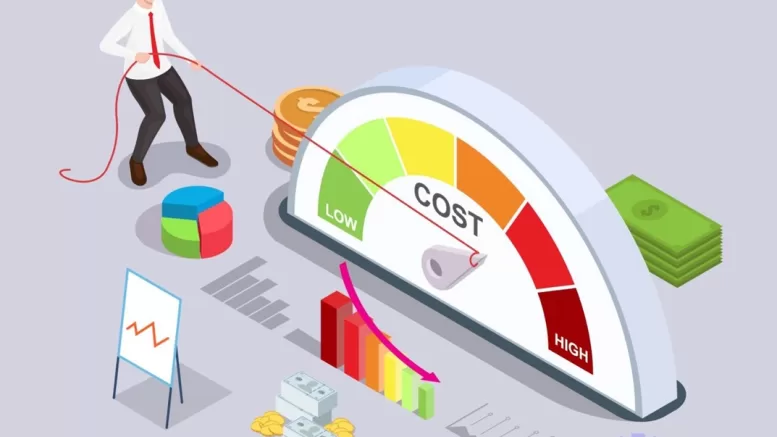
Facilities does not have to turn every expenditure into a saving. It does need to show leadership what the organization receives in return.
Originally published October 2024. Updated September 2026 to reflect current owner-side facility and capital planning practices.
A facility manager proposes replacing an aging piece of equipment.
Leadership sees the capital request.
Facilities sees the service calls, increasing maintenance costs, parts that are becoming harder to obtain, energy consumption and what happens to the business if the equipment fails.
Both are looking at the same asset.
They are not necessarily looking at the same decision.
That is why demonstrating the value of facility management requires more than reporting how much was spent—or how much was saved.
The more useful question is:
“What did the organization receive in return?”
Not Every Good Decision Produces a Simple ROI
Return on investment can be useful when the benefits are readily measurable.
An energy project may reduce utility expense. A controls upgrade may reduce operating hours. Replacing unreliable equipment may reduce maintenance costs.
Those benefits can be compared with the investment.
But facility decisions are not always that simple.
What is the ROI of avoiding a major business interruption?
What is the value of replacing a critical system before it fails?
How should leadership value improved reliability, regulatory compliance, employee comfort or reduced operational risk?
Trying to force every facility decision into a simple ROI percentage can create a false sense of precision.
Sometimes the better business case is built from several measures.
Start With the Business Problem
Before calculating ROI, establish what problem the proposed investment is intended to solve.
Is the organization trying to:
reduce recurring operating expense;
improve reliability;
address an asset nearing the end of its useful life;
reduce energy consumption;
avoid business interruption;
meet a regulatory or compliance requirement;
increase capacity;
reduce maintenance requirements; or
support a larger capital or business objective?
Once the objective is clear, the financial analysis becomes much more meaningful.
A project justified primarily by reliability should not be presented as though energy savings were its only measure of success.
Look Beyond First Cost
Facility organizations often see the consequences of purchasing decisions long after the original project team has moved on.
A lower-cost piece of equipment may require more maintenance.
A proprietary system may increase service costs.
An inexpensive replacement may consume more energy.
Equipment that is difficult to access may increase labor requirements every time it is serviced.
That is why Total Cost of Ownership and Lifecycle Cost Analysis can be more useful than simply comparing purchase prices.
The lowest initial cost and the lowest long-term cost are not necessarily the same thing.
Facilities can help leadership understand that distinction because it sees what assets actually cost to operate.
Maintenance Data Is Capital Planning Data
Work orders and maintenance records are not merely operational records.
They can be early indicators of future capital requirements.
If an asset is requiring increasingly frequent repairs, experiencing recurring failures or consuming more maintenance resources, that information should not remain isolated within the operating organization.
It belongs in the capital planning discussion.
Facilities can help answer questions such as:
Are we maintaining this asset—or extending something that should already be replaced?
Is this still an operating expense, or are we watching a capital requirement develop?
What happens if replacement is deferred another year?
Those are executive capital-allocation questions built from facility operating data.
Avoided Cost Is Real—but Be Careful How You Present It
Preventive maintenance, inspections and early intervention can prevent larger failures.
That creates value.
But avoided costs should be presented credibly.
If a $10,000 repair prevents a failure that might have cost $100,000, the organization did not necessarily “save $90,000” in the same way it would if an actual recurring expense were reduced by that amount.
The better case may be:
the identified risk;
the probability and consequence of failure;
the cost of intervention;
the potential business impact;
and the reason action is justified now.
Leadership can then evaluate the decision with a clearer understanding of both cost and risk.
Operating Performance Should Inform Capital Investment
One of Facilities’ most valuable contributions is connecting what is happening inside the building today with what the organization will need to fund tomorrow.
An aging chiller is not simply a maintenance issue.
Neither is a roof approaching the end of its useful life, an electrical system nearing capacity, obsolete controls or equipment with recurring failures.
Those conditions eventually become capital decisions.
Facilities can improve capital planning by bringing forward:
asset condition;
maintenance history;
failure frequency;
operating cost;
energy performance;
serviceability;
remaining useful life;
operational consequence of failure; and
opportunities to coordinate replacement with other planned work.
That gives leadership a better basis for deciding what to fund, when to fund it and what risk is being accepted by waiting.
Speak in the Language of the Decision
Facility professionals do not need to become accountants to communicate effectively with leadership.
They do need to translate technical conditions into business consequences.
Instead of:
“The chiller is 22 years old.”
Leadership may need to hear:
“The chiller is beyond its expected service life, has required three significant repairs in two years, uses a refrigerant that is becoming more difficult to support, and serves an operation that cannot tolerate an extended summer outage.”
Now there is a decision to make.
The technical condition hasn’t changed.
The way the issue is communicated has.
From Cost Center to Business Partner
I am not sure Facilities needs to prove that it is a “profit center.”
For most organizations, that is not its role.
Facilities does, however, need to demonstrate how operating decisions affect cost, risk, asset performance and future capital requirements.
Sometimes that means producing measurable savings.
Sometimes it means extending the useful life of an asset.
Sometimes it means identifying a capital requirement early enough for the organization to plan for it.
And sometimes the value is preventing a disruption that leadership never wants to experience.
The objective is not to make every facility initiative look profitable.
It is to give leadership enough information to make a sound business decision.
Leadership takeaway: Facility management demonstrates its value when operating knowledge becomes decision-quality information—connecting asset performance, cost and risk to the organization’s capital priorities.
About the Author: Richard Neuman advises organizations on capital planning, project governance, and complex capital programs. He has overseen more than $2 billion in capital investments across commercial real estate, healthcare, utilities, industrial, broadcast, and development projects.
He writes candidly from an owner-side perspective about the executive decisions and organizational dynamics that shape capital project outcomes.
Leading a major capital program or facing a complex capital decision?
Contact Richard.
Subscribe for insights on capital planning, project governance, and the executive decisions that shape project outcomes long before construction begins.



Be the first to comment on "From Cost Center to a Savings Center: Proving the ROI of Facility Management"