
Years of recurring mechanical problems had been documented, but the full cost of replacing the system had never been established.
Facilities had been dealing with the same mechanical problems for years. Occupants complained that some areas were too hot while others were too cold. Equipment failures generated repeated service calls, and repairs kept the building operating without resolving the underlying problems.
When a broader facility renovation moved forward, the aging mechanical systems were included in the project, along with a roof that was also in poor condition.
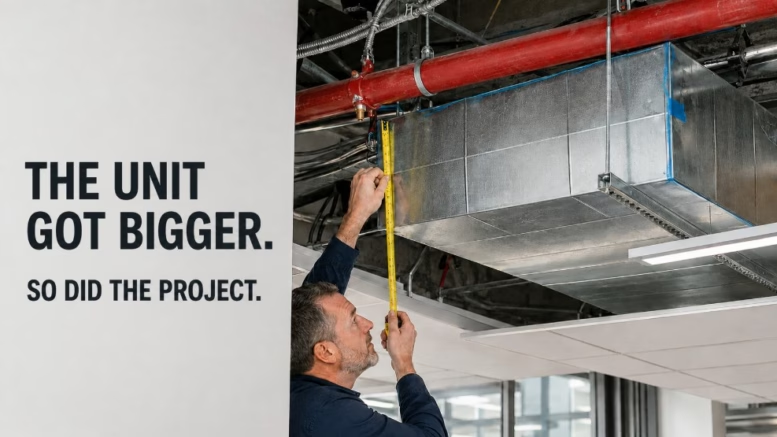
The engineers determined that the building needed roughly one-third more mechanical capacity than the original system provided. Accommodating larger equipment meant changes to ductwork, potential structural modifications, roof penetrations, and other building systems.
What leadership had understood as an equipment replacement was becoming a much larger capital project.
The repair history had documented the problems for years, but nobody had established what a permanent correction would actually involve.
The Repair History Was There
From the Facilities perspective, leadership’s reaction to the growing cost was frustrating.
The records showed repeated service calls, temperature complaints, equipment failures, and vendors returning to make repairs. The condition of the equipment was well known, and Facilities had been keeping it operational despite increasing problems.
Those records had largely been treated as maintenance activity. Another work order, another repair invoice, another complaint closed when the immediate problem was corrected.
No comprehensive assessment had established what permanent replacement would require, leaving leadership without a reliable understanding of the likely capital cost, building modifications, and operational disruption.
The Replacement Was Not One-for-One
The building had changed considerably since the original mechanical system was designed.
Walls had moved, space uses had changed, and air had been redirected over the years to address individual comfort problems.
The revised layout required additional mechanical capacity, affecting equipment selection, airflow requirements, and ductwork sizing.
At the roof, larger equipment could require structural modifications, new penetrations, and associated roofing work. The planned roof replacement also had to be coordinated with the mechanical design to avoid disturbing completed work.
Below the roof, larger ductwork had to compete for space in crowded ceiling areas containing lighting, sprinkler piping, and other building systems. Changes could extend into ceilings, finishes, and life-safety systems.
The owner understood why the equipment needed replacement. The extent of the associated building modifications was an unwelcome surprise.
Once the engineering requirements were reviewed and validated, leadership still had to decide whether to fund the permanent correction or continue operating with the existing system’s limitations.
When Maintenance Becomes a Capital Planning Issue
Facilities had years of evidence that the system was deteriorating. Leadership was now learning how much of the building a permanent correction would affect.
The missing step was an engineering assessment connecting the recurring maintenance problems to a defined capital requirement.
That assessment could have identified the likely replacement scope, related building modifications, preliminary cost, and operational disruption before the renovation forced the issue.
It would also have given leadership an opportunity to evaluate alternatives, prioritize funding, and decide whether continued repairs were reasonable.
An assessment doesn’t require immediate replacement. It provides the information needed to understand the consequences of deferring it.
Without that information, organizations can continue spending money on repairs while carrying a substantial future capital requirement that has never been properly defined.
Leadership Takeaway
Ask Facilities which assets have recurring failures, increasing repair costs, or persistent operating complaints without a preliminary engineering assessment of their permanent replacement requirements.
For those assets, establish the likely scope, cost, disruption, and risk of continued deferral.
Leadership may still decide to postpone replacement, but that decision should be informed by what a permanent correction would actually require.
About the Author: Richard Neuman advises organizations on capital planning, project governance, and complex capital programs. He has overseen more than $2 billion in capital investments across commercial real estate, healthcare, utilities, industrial, broadcast, and development projects.
He writes candidly from an owner-side perspective about the executive decisions and organizational dynamics that shape capital project outcomes.
Leading a major capital program or facing a complex capital decision?
Contact Richard.
Subscribe for insights on capital planning, project governance, and the executive decisions that shape project outcomes long before construction begins.




Be the first to comment on "The Capital Project Hiding in the Repair History"