
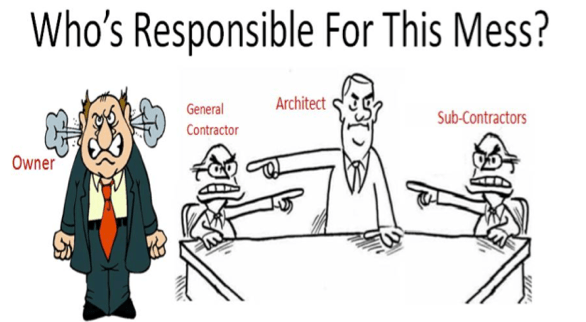
Capital project problems are difficult enough. Owners lose options when the project team waits to communicate them.
Originally published May 2020. Updated October 2026 to reflect current owner-side project communication and governance practices.
“The single biggest problem in communication is the illusion that it has taken place.”
— George Bernard Shaw
Capital projects can take months or years and require hundreds or thousands of decisions.
Designers, contractors, consultants, vendors, operators and business stakeholders may all be involved. Each sees the project from a different perspective and has different information.
That makes communication important.
But communication is not simply about holding meetings, distributing reports or copying more people on emails.
The real question is whether the right information reaches the right people while they can still do something about it.
Information Has a Useful Life
A developing schedule problem identified early may give the project team options.
Work might be resequenced. Procurement could be accelerated. Additional resources might be considered. A design decision could change. The owner might adjust a business milestone.
Report the same problem after the milestone has already been missed and much of that optionality disappears.
Now the team is explaining what happened.
Cost information works the same way.
A potential cost exposure identified while alternatives still exist gives the owner something to manage. The owner can challenge the scope, evaluate alternatives, use contingency, defer work or make an informed decision to proceed.
Present the cost after the commitment has been made and the conversation changes.
Information has greater value when the owner still has choices.
Bad News Does Not Get Better With Age
Project teams don’t always delay difficult information intentionally.
Sometimes they believe they can solve the problem before escalating it.
Sometimes the impact is still uncertain.
Sometimes nobody wants to raise an issue that may disappear on its own.
And sometimes people simply don’t want to be the person delivering bad news.
But waiting has consequences.
An owner does not necessarily need every developing issue elevated immediately. Projects would become unmanageable if every question or field condition became an executive matter.
The project team does, however, need a clear understanding of when an issue crosses the threshold from something the team is managing to something the owner needs to know.
That threshold might involve cost, schedule, scope, operational impact, safety, business continuity, regulatory exposure or another project-specific risk.
The important part is establishing it before the difficult issue occurs.
More Communication Is Not Necessarily Better Communication
Poor project communication can also come from over-communication.
If every stakeholder receives every email, attends every meeting and gets copied on every developing issue, important information can become harder to identify.
People stop reading.
Meetings become crowded.
Decision-makers spend time on issues that should be resolved elsewhere.
The objective should not be maximum communication.
It should be useful communication.
For each project, I want to understand:
- Who needs what information?
- What decisions are they responsible for?
- How frequently do they need updates?
- What information requires immediate escalation?
- What can remain within the project team?
- How will decisions and commitments be documented?
- Who is responsible for communicating changes?
- What happens when a required decision is late?
Those expectations should not have to be invented every time something goes wrong.
Difficult Stakeholders Are Still Stakeholders
Every project has different personalities.
Some stakeholders want considerably more information than others. Some challenge almost every recommendation. Others participate infrequently until an issue directly affects them.
It can be tempting to minimize interaction with a difficult stakeholder.
That usually makes the problem worse.
If someone has legitimate authority, responsibility or operational impact on the project, disengagement does not eliminate that person’s influence. It simply increases the chance that concerns surface later, when they are more difficult or expensive to address.
The answer is not endless accommodation.
It is clarity.
What decisions require their input? When is that input required? What information do they need? What happens if a decision is not made?
A defined decision process is usually more effective than trying to manage stakeholder personalities one conversation at a time.
The Owner Should Not Have to Discover the Problem
One of the most damaging moments on a capital project is when leadership learns about a significant problem indirectly.
The schedule report says one thing, but someone mentions that a major delivery is late.
The cost report shows the project within budget, but several unresolved exposures have not yet been incorporated.
A business stakeholder hears about a change before the person responsible for approving it.
At that point, the problem is no longer only cost, schedule or scope.
It becomes a question of confidence in the project’s reporting and governance.
An owner’s representative or project leader should help prevent that disconnect.
That doesn’t mean bringing every problem to leadership. It means making sure significant information is surfaced at the appropriate level, with enough context to support a decision.
When possible, I don’t want to bring an owner only a problem.
I want to be able to explain:
What happened?
What does it affect?
What are the options?
What decision is needed?
When is it needed?
That turns communication into project management rather than simply reporting.
Communication Preserves Options
Capital projects will have problems.
Some will be minor. Some will be expensive. Some will require decisions nobody wanted to make.
Good communication doesn’t prevent all of them.
What it can do is give the owner time to respond while choices still exist.
That is why bad news should not be softened until it becomes meaningless, buried in a report or held while the team hopes the issue resolves itself.
Bad news does not get better with age.
And on a capital project, the cost of waiting is often measured in the options the owner no longer has.
About the Author: Richard Neuman advises organizations on capital planning, project governance, and complex capital programs. He has overseen more than $2 billion in capital investments across commercial real estate, healthcare, utilities, industrial, broadcast, and development projects.
He writes candidly from an owner-side perspective about the executive decisions and organizational dynamics that shape capital project outcomes.
Leading a major capital program or facing a complex capital decision?
Contact Richard.
Subscribe for insights on capital planning, project governance, and the executive decisions that shape project outcomes long before construction begins.




Be the first to comment on "Bad News Does Not Get Better With Age"