The credential may have changed. The more important question is how the access-control system fits into the building, the operation and the organization’s security requirements.
Originally published October 2011. Updated October 2026 to reflect changes in access-control technology and the growing integration of physical security with building and technology systems.
Security is one of the top concerns of business owners when fitting out new office space. Restricted or sensitive areas, heavy traffic, and multiple interior and exterior doors all contribute to security concerns.
Access-control systems can help manage unauthorized entry while providing a record of who has access to different areas of a facility.
What Are Access-Control Systems?
Besides controlling entry to restricted areas, access-control systems can maintain electronic records of activity. Those records can help answer a basic question when something happens: Who had access to this area at that time?
Access control isn’t limited to doors. Depending on the facility, it may also control access to elevators, turnstiles, parking areas and other restricted locations.
When I originally wrote this article in 2011, much of the discussion centered on the type of credential being used.
That has changed considerably.
The Credential Has Changed
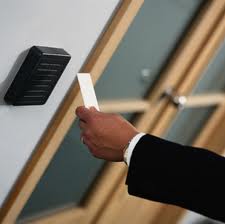
In 2011, the common choices included magnetic-stripe cards, proximity cards, key fobs, keypads and biometric readers.
Those technologies haven’t all disappeared, but the choices have expanded. Depending on the application, today’s systems may use smart credentials, mobile credentials, biometrics, PINs or combinations of authentication methods.
For an owner planning a new office or capital project, however, the credential itself is only part of the decision.
The larger questions are how access is administered, what happens when an employee joins or leaves the organization, which areas require different security levels, how visitors are handled, what records are retained and how the system interfaces with the rest of the building.
Access Control Is a Building System
An access-control system doesn’t operate in isolation.
Controlled doors involve hardware, power, communications and life-safety requirements. Depending on the facility, access control may also interface with elevators, turnstiles, parking systems, visitor management, video surveillance and other security systems.
That means access control needs to be coordinated during design—not treated simply as security equipment that gets attached to the doors near the end of construction.
Benefits of Using Access Control
One of the simplest benefits is the ability to change someone’s access without changing the locks. If a credential is lost, stolen or not returned by a departing employee, that credential can be disabled while everyone else’s access continues uninterrupted.
Access control can also allow public and employee areas to operate simultaneously. Visitors may enter designated portions of a facility while employees use their credentials to enter restricted areas.
Different access privileges can be assigned based on an individual’s role. One employee may need access only to exterior doors and general office areas, while another may require access to equipment rooms, sensitive records or other restricted spaces.
The system can also maintain activity records and control access based on time, location and other established permissions.
Emergency operation needs to be considered as well. Power loss, fire-alarm conditions and other emergency events can affect how controlled doors are expected to operate. Those requirements need to be coordinated with the appropriate design, security and life-safety professionals.
The Owner’s Question
The technology will continue to change.
The more durable question is whether the access-control system has been designed around how the organization and the building actually need to operate.
Who gets access? Who administers it? What happens when power or communications fail? How does it interact with life-safety systems? And who is responsible for making sure all of those pieces work together?
Those questions matter considerably more than whether someone enters the building with a card, a phone or a fingerprint.



Be the first to comment on "Access Control Systems Minimize Security Risks in Your Office"