
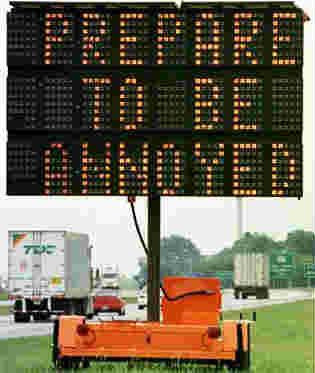
Most punch-list problems are small. What they reveal about project closeout often isn’t.
A construction project can be substantially complete and still have dozens of things that make an owner wonder whether anyone was paying attention.
A ladder leaned against a newly painted wall.
Dirty fingerprints on ceiling tiles.
Wire clippings embedded in new carpet.
HVAC filters that were never changed after construction.
Keys left inside cabinets.
A closeout package that arrives without the as-builts.
Individually, most of these aren’t project disasters. Collectively, they say something about how the project was managed as it approached the finish line.
Years ago, I asked other owner’s representatives and project professionals to share the post-construction conditions that drove them crazy. Their answers ranged from housekeeping annoyances to problems involving life safety, water infiltration, HVAC performance and incomplete closeout.
The list still holds up remarkably well.
The Small Stuff Usually Isn’t Just Small Stuff
Jerry Maffia, then a Senior Project Manager at LPCiminelli in New York, made an important point when I originally assembled this list: if something matters, put the expectation into the scope of work.
Don’t assume everyone shares the owner’s definition of finished.
Brian Bott, a construction manager in Hawaii, advocated “Management by Walking Around.” His point was equally practical: get into the field and see conditions yourself.
And Christina Flynn of the Coconino County Facilities Management Department in Arizona set a simple standard for contractors: the carpet, walls, ceilings, elevators and restrooms should look better when they leave than when they found them.
That is still a pretty good starting point.
Here are the 35.5 post-construction peeves we collected.
35.5 Post-Construction Peeves
1. Scuffs caused by leaning ladders against freshly painted walls.
2. Moving ceiling tiles with filthy hands and leaving marks.
3. Sliding ceiling tiles across the grid and gouging or scratching them.
4. Leaving coffee cups and half-eaten food on windowsills for someone else to clean up.
5. Electricians and cable installers stripping wire for systems furniture and wall plates and leaving the casings and wire strands throughout the new carpet.
6. Furniture installers and movers taking furniture off dollies and using their bodies against finished walls for leverage, leaving scratches and scuffs.
From Wayne Brown, CRE Project Management, Dallas/Fort Worth
7. Carpet installers scuffing the bottoms of freshly painted doors and walls during installation.
8. Painters using custom colors without leaving the paint formula or touch-up paint behind.
9. Electricians leaving troffer fixtures dusty or covered with fingerprints.
10. Low-voltage technicians using desktops and workstations instead of ladders or scaffolds and disturbing insulation above the ceiling.
11. Millwork delivered with sawdust in the drawers or pulls and handles that are poorly fastened.
12. Plumbers leaving sewer P-traps dry before water is turned on.
13. Landscapers placing topsoil or mulch above foundation weep holes. Not a tenant-improvement issue, but potentially a significant building issue.
From David Harrier, Architect, Dallas/Fort Worth
14. Plumbers leaving valves and faucets open or water closets disconnected when the meter is installed and water is turned on. A seemingly minor oversight can become a major water-damage event.
From Brian Bott, Construction Manager, Hawaii
15. Clients deciding late in the project that they want walls moved without understanding the effects on HVAC zoning, sprinkler piping, power and data.
From Bob Mitchell, Construction & Development Consultants, South Boston, Virginia
16. Appliances or equipment left with water or power sources turned off or disconnects left in the off position.
17. Cabinet and drawer keys left inside the cabinets or doors—or handed over unlabeled on a wire or ring.
18. Door hinges damaged because door handles were wedged into the hinge to hold doors open.
19. Inadequate mechanical-piping labeling.
20. HVAC filters not being changed at the end of construction.
21. Paint touch-ups that aren’t noticeable until changing light conditions expose them.
From Johnnie C. Morgan, Owner’s Representative, M.A. Center, Hermosa Beach, California
22. Leaving seldom-visited areas—attics, crawl spaces and mechanical spaces—filthy.
23. Failing to protect finished surfaces while work continues above or around them.
From Patrick McGarry, Civic Projects Manager, City of Carlsbad, California
24. Failing to protect data outlets from drywall dust, resulting in connection problems when IT begins installing phones and computers.
From Jerry Maffia, Senior Project Manager, LPCiminelli, New York
25. Project managers who don’t provide adequate cleaning and protection before move-in.
From Shawn Tyler, Tycor, Little Rock
26. Inadequate HVAC air balancing. Before occupants move in, operate the system long enough to determine whether offices, break rooms, file rooms and other spaces are actually comfortable.
From Steve Arden, Capital Projects Manager, Mount Vernon Nazarene University, Ohio
27. Contractors propping doors open while heating or air conditioning is running and failing to close them when they leave—particularly when the owner is paying the utility bill.
From David Rigsby, Rigsby Project Management, Roswell, Georgia
28. Penetrations through rated walls that haven’t been properly sealed.
From Roland Wong, Project Manager, Clark Construction, Los Angeles
29. Water infiltration through the building cladding or exterior skin.
30. Water infiltration through the roofing membrane.
31. Water infiltration through roof-mounted HVAC ducts.
From Todd Allen, The ForeSight Partners, Culver City, California
32. The tenant’s IT professional discovering on moving day that when the telephone company said there were “circuits in the building,” it meant the circuits terminated at the minimum point of entry in the basement—not at the tenant’s space upstairs.
33. Failing to obtain complete permit sign-off because a low-voltage vendor didn’t pull the required permit or obtain its inspection.
34. Having the fire marshal stop the final walkthrough because furniture systems were installed before approval to load the floor with combustible materials.
35. Requests for retention payments arriving before the owner has received the required closeout packages.
35.5. Receiving closeout documents from design-build MEP and sprinkler contractors with no as-built modifications.
What the List Really Says
Reading the list years later, what strikes me isn’t how different these problems are.
It’s how many have the same underlying cause.
The project was nearing completion, everyone was pushing toward occupancy, and attention was shifting to the next deadline before the current job was actually finished.
Some items are cosmetic. Some affect operations. Others involve permits, life safety, water intrusion, HVAC performance or the owner’s ability to operate and maintain the building after the project team leaves.
That is why closeout cannot be treated as administrative cleanup after construction.
The owner should be asking:
What still has to be complete, tested, inspected, documented and turned over before we call this project finished?
A certificate of occupancy, substantial completion milestone or successful move-in doesn’t answer that question by itself.
And neither does a punch list with a lot of checked boxes.
Leadership Takeaway: The last few percent of a project is where small workmanship issues, incomplete testing, missing documentation and unresolved operational problems accumulate. Establish the owner’s closeout standard before the project reaches that point—and don’t release the project simply because everyone is ready to move on.
This article incorporates observations originally contributed by members of the LinkedIn Owner’s Representatives group, then moderated by Patrick McGarry, Civic Projects Manager for the City of Carlsbad, California.
About the Author: Richard Neuman advises organizations on capital planning, project governance, and complex capital programs. He has overseen more than $2 billion in capital investments across commercial real estate, healthcare, utilities, industrial, broadcast, and development projects.
He writes candidly from an owner-side perspective about the executive decisions and organizational dynamics that shape capital project outcomes.
Leading a major capital program or facing a complex capital decision?
Contact Richard.
Subscribe for insights on capital planning, project governance, and the executive decisions that shape project outcomes long before construction begins.




So true Richard,
Carpets are cut larger than offices in the shop, when rolled out in the room they inevitably scrape against the bottom of the freshly painted walls always leaving scrape marks. There is no such thing as paint touch ups. Painters end up repainting the entie room. Solution? Carpet tile, Have the painter paint over the new carpet, That will increase the painter’s cost, Then, have the flooring contractor come back after paint and install the base, that will increase the flooring cost.?
Love it!! Great list.