
Sometimes the most consequential capital decisions appear after work begins.
The roof is already off.
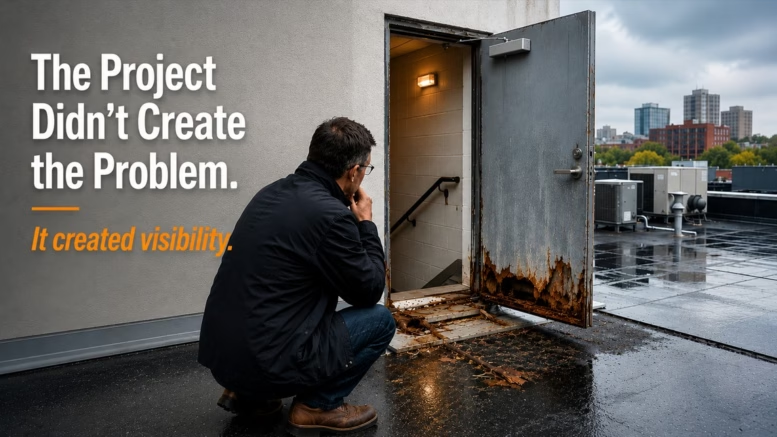
The contractor calls to report a deteriorated roof access door, rot around the threshold, and signs of water intrusion that have likely existed for years. None of it was included in the approved budget.
The project was approved to replace a roof. Now it is showing everyone something else.
Once the roofing system comes off, areas that haven’t been closely inspected in years become visible. Conditions that remained hidden behind assemblies suddenly sit in plain view. Water intrusion. Deteriorated components. Damage that existed long before the project arrived.
The project begins revealing more than it was funded to address.
The Myth of Scope Creep
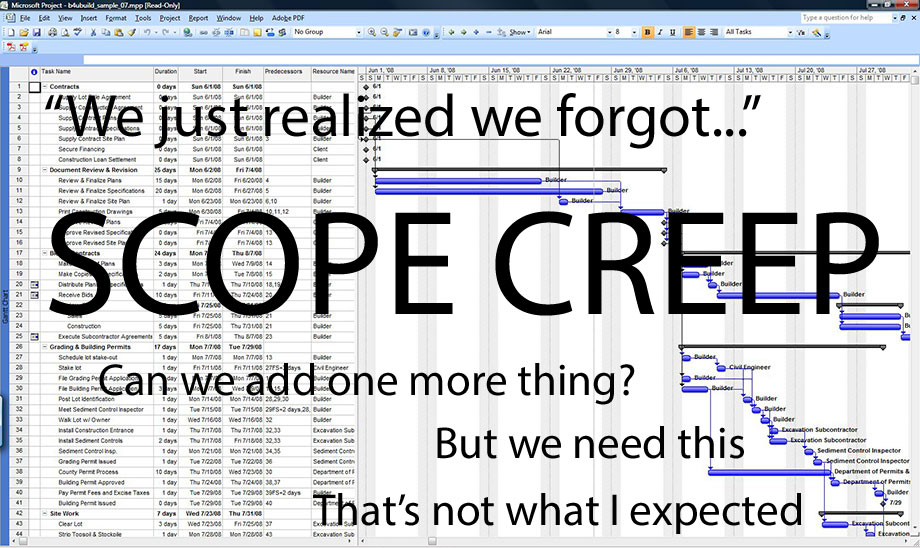
This is often where the conversation turns to scope creep.
Sometimes that’s accurate. Often it isn’t.
The condition was already there. The project didn’t create it. The work exposed it.
Nobody is debating whether the door is deteriorated. Everyone can see it. The discussion is whether this project should solve it.
That decision often has less to do with construction than capital allocation.
When Deferral Becomes a Capital Decision
The roof access door may not be preventing operations today. The water intrusion may not have caused visible damage inside the building. The condition may have existed for years without attracting attention.
In many organizations, that becomes the argument for deferral.
The project was approved to replace a roof, not a door, stair enclosure, or adjacent building component. Stay within scope. Stay within budget. Move on.
The logic is understandable, but it is also incomplete.
The contractor is already mobilized, access is already open, and the surrounding work is already exposed. The organization may not return to this area for another decade. The question is no longer whether the condition exists. The question is whether it becomes more expensive to ignore while everything is open.
The project didn’t create the problem. It created visibility
Where Need Quietly Becomes Want
Not every exposed condition justifies action.
Some conditions represent active deterioration. Others are simply opportunities to improve something that continues functioning adequately. The challenge is that projects rarely uncover only one issue.
Once work begins, the list grows. A repair becomes an upgrade, an upgrade becomes an enhancement, and an enhancement becomes a broader improvement discussion. The project starts finding things that could be done rather than things that need to be done.
The discussion gradually shifts from preserving the asset to improving it.
Experienced capital leaders spend as much time managing that boundary as they do evaluating the condition itself.
The Project as an Inspection Tool
Most assets remain partially invisible until another project exposes them.
Deferred maintenance hides behind assemblies. Building envelope issues remain concealed behind finishes. Aging systems continue operating quietly until adjacent work reveals their condition.
By the time the contractor uncovers the condition, the organization is often seeing the asset more clearly than it has in years.
In that sense, the project becomes an inspection tool whether it was intended to or not.
What Project Reporting Rarely Captures
Different organizations will reach different conclusions based on funding, risk tolerance, operational priorities, and the condition of the broader portfolio.
But experienced capital leaders recognize something that project reporting rarely captures.
The most consequential scope decisions are often not driven by changing requirements.
They are driven by newly visible conditions that were already there.
The work simply made them impossible to ignore.
Visibility does not automatically justify action.
But exclusion from the original scope does not automatically justify deferral either.
About the Author: Richard Neuman advises organizations on capital planning, project governance, and complex capital programs. He has overseen more than $2 billion in capital investments across commercial real estate, healthcare, utilities, industrial, broadcast, and development projects.
He writes candidly from an owner-side perspective about the executive decisions and organizational dynamics that shape capital project outcomes.
Leading a major capital program or facing a complex capital decision?
Contact Richard.
Subscribe for insights on capital planning, project governance, and the executive decisions that shape project outcomes long before construction begins.


Be the first to comment on "When a Project Finds More Than It Was Funded to Fix"