Power disturbances can become business interruptions when critical technology is not adequately protected.
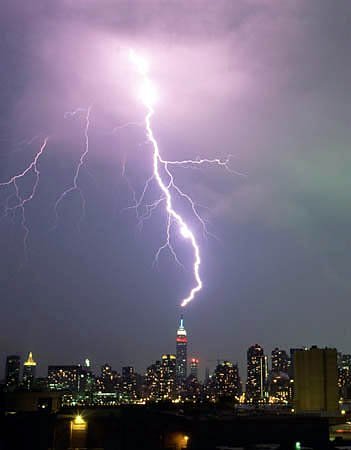
Lightning and voltage surges can damage sensitive electronics and interrupt the systems a business depends on to operate.
Network equipment, communications systems, servers, security systems, building controls and other electronic equipment may all be vulnerable.
The question isn’t simply whether equipment can be damaged.
What happens to the business if that equipment goes down?
Where Do Voltage Surges Come From?
Lightning is one source of electrical surges, but it isn’t the only one.
Power disturbances can also result from utility switching, equipment operation, electrical faults and other changes within a building’s electrical system.
Some events may cause immediate equipment failure. Others can damage sensitive components or shorten equipment life without producing an obvious failure at the time.
That makes surge protection more than a response to severe weather.
Protection Is a System
Protecting critical electronics should not depend solely on plugging equipment into a surge-protected power strip.
Depending on the facility and equipment involved, protection may include the building’s grounding and bonding system, appropriately selected surge-protective devices, uninterruptible power supplies and other measures incorporated into the electrical and technology infrastructure.
The appropriate solution should be evaluated by qualified electrical and technology professionals based on the building, equipment and operational requirements.
Start With Business Criticality
Not every piece of electronic equipment requires the same level of protection.
Start by identifying the systems the business depends on.
- Which systems cannot go down?
- How long can they be unavailable?
- What operations stop if they fail?
- Is backup power required, or is controlled shutdown sufficient?
- How quickly can damaged equipment be replaced?
The answers help determine where additional protection, redundancy or backup capability is justified.
Include It in Project Planning
When renovating a facility, installing new technology or replacing critical equipment, electrical protection and continuity should be considered as part of the project—not after the systems are installed.
That means coordinating electrical requirements, technology infrastructure, surge protection and backup-power needs while the design can still accommodate them.
The cost of protection can then be evaluated against the operational consequence of losing the equipment it is intended to protect.
Leadership Takeaway: Protecting electronics is not simply an equipment decision. Identify which systems are critical to the business, understand the consequence of losing them, and make sure the electrical and technology infrastructure provides an appropriate level of protection and continuity.



Be the first to comment on "Protecting Your Business Electronics From Lightning and Voltage Surges"