
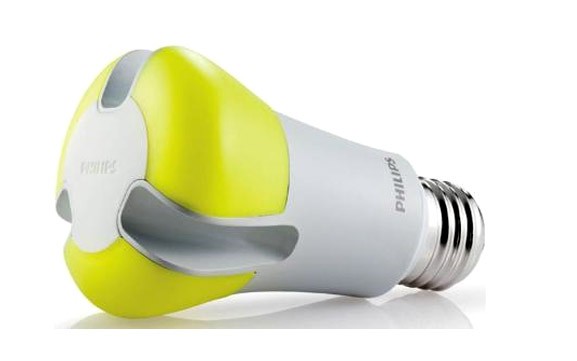
Watts tell you how much power lighting uses. Lumens tell you how much light it produces. Kelvin tells you something else entirely.
Updated October 2026
For generations, most of us learned to buy light bulbs by wattage.
A 60-watt bulb meant one thing. A 100-watt bulb meant something brighter.
The problem is that watts were never really a measure of brightness. They measure how much electrical power a lamp uses.
That distinction became much more important as incandescent lamps gave way to fluorescent, compact fluorescent and eventually LED lighting.
An LED can produce the light you need while using a fraction of the power of an older incandescent lamp.
So if watts don’t tell you how much light you’re getting, what does?
Start With Three Terms
Watts
A watt measures electrical power consumption.
Lower wattage generally means less electricity is being consumed, but wattage alone does not tell you how much useful light a lamp or fixture produces.
Lumens
A lumen measures the amount of visible light produced by a light source.
More lumens generally means more light.
For a familiar reference point, the traditional 60-watt incandescent bulb produced roughly 800 lumens. An LED can produce a similar amount of light while consuming considerably less power.
That is why comparing an LED’s wattage directly with the wattage of an old incandescent lamp can be misleading.
When you’re trying to understand light output, look at lumens.
Kelvin
Kelvin (K) describes the color appearance of the light.
Lower Kelvin values generally appear warmer or more yellow. Higher values appear cooler or more blue-white.
As a rough guide:
- 2700K–3000K: warm white
- 3500K: neutral to slightly warm
- 4000K: cooler, cleaner white
- 5000K and above: increasingly cool or daylight-like appearance
There isn’t one correct color temperature for every space.
The appropriate choice depends on the environment, finishes, task, desired appearance and sometimes an organization’s existing lighting standard.
And that is where lighting selection starts getting more complicated than replacing one bulb with another.
Equal Lumens Do Not Necessarily Mean Equal Results
Suppose two LED products both produce 800 lumens.
Are they interchangeable?
Maybe.
The amount of light produced is only part of the story. You also need to consider where that light goes and what it looks like when it gets there.
A fixture’s optics and distribution affect how light reaches the work surface, walls and surrounding space. Two products with similar lumen output can produce noticeably different results in the same room.
That matters even more in commercial spaces, where lighting should be evaluated as part of the room rather than simply as a collection of lamps.
What About CRI?
Another term you may encounter is CRI — Color Rendering Index.
CRI is an indication of how accurately colors appear under a particular light source compared with a reference source.
That can matter in offices, retail environments, healthcare settings, studios, hospitality spaces and anywhere else where the appearance of people, materials, finishes or products is important.
Kelvin and CRI answer different questions.
Kelvin describes the apparent color of the light itself.
CRI helps describe how colors look under that light.
LEDs Are Also Part of a Control System
Modern lighting frequently involves more than the fixture.
Dimming, occupancy sensors, daylight harvesting, scheduling and building controls may all be part of the system.
That means compatibility matters.
The LED fixture or lamp, driver, dimmer, sensor and control system need to work together. A product that looks perfectly acceptable on a cut sheet may create problems if it does not dim properly, communicate with the controls or perform as expected within the complete system.
This becomes particularly important when an owner is replacing only part of an existing lighting installation.
Don’t Buy on Rated Life Alone
LED products are often marketed with long rated lives.
That can be valuable, particularly where changing lamps or accessing fixtures is difficult or disruptive.
But the LED itself is only one component.
Drivers and other electronic components can fail. Heat can affect performance. Operating conditions matter. Product quality varies.
For a commercial project, look at the complete fixture or system, the manufacturer’s warranty, replacement strategy and the availability of components rather than relying on a single advertised life-expectancy number.
Start With the Reason You’re Changing the Lighting
Before comparing fixtures, ask:
What are we actually trying to improve?
- Is the objective lower energy use?
- Better light levels?
- Improved appearance?
- Reduced maintenance?
- Better controls?
- A more comfortable workplace?
- Compliance with a project or building standard?
Often it is some combination of these.
That objective should drive the lighting criteria.
A successful lighting upgrade should deliver the required light, appearance and control while using energy efficiently and fitting the way the space actually operates.
Watts, lumens and Kelvin help you understand the vocabulary.
They don’t make the decision by themselves.
Leadership Takeaway: When evaluating a lighting upgrade, ask the team to define the required light levels, appearance, controls and operating objectives before selecting fixtures. A lower wattage is useful only when the lighting system still delivers what the space needs.
About the Author: Richard Neuman advises organizations on capital planning, project governance, and complex capital programs. He has overseen more than $2 billion in capital investments across commercial real estate, healthcare, utilities, industrial, broadcast, and development projects.
He writes candidly from an owner-side perspective about the executive decisions and organizational dynamics that shape capital project outcomes.
Leading a major capital program or facing a complex capital decision?
Contact Richard.
Subscribe for insights on capital planning, project governance, and the executive decisions that shape project outcomes long before construction begins.
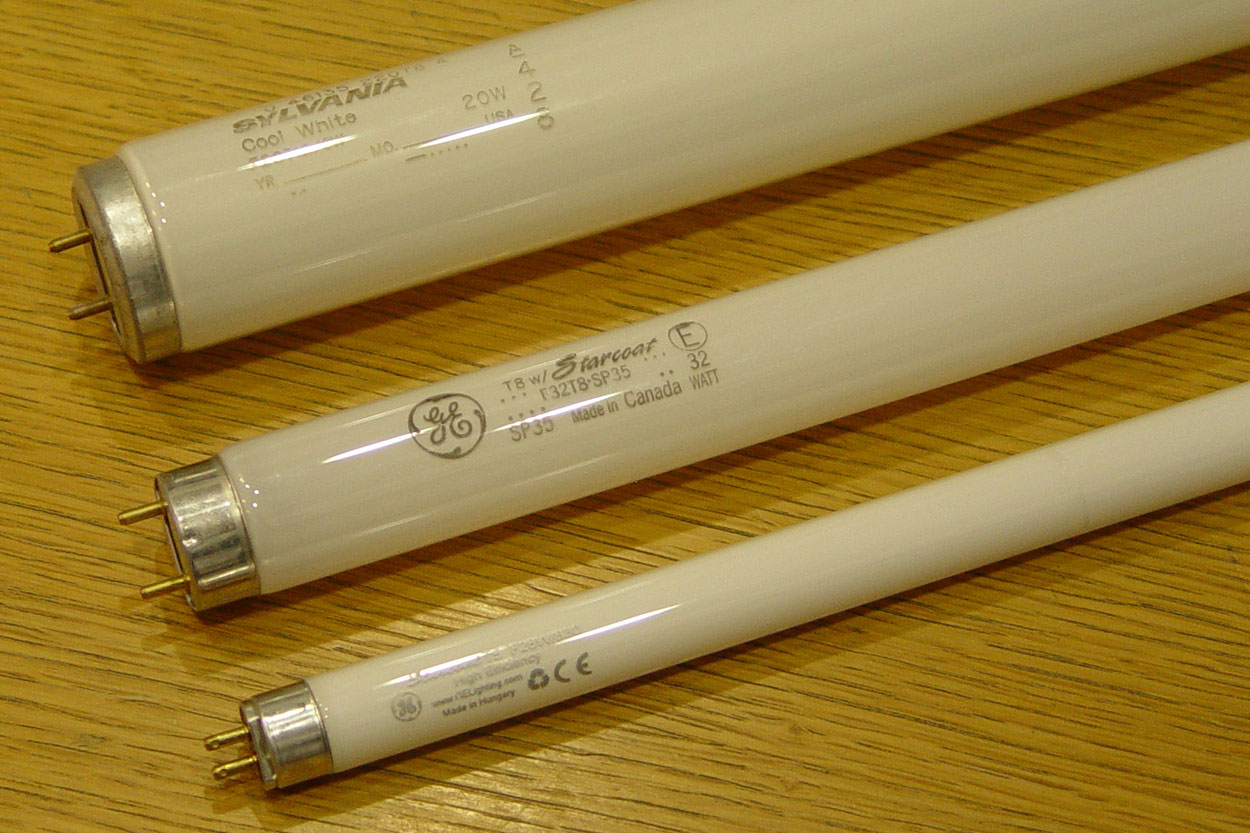



I want to affirm the comments that even at 2700 Kelvins, LED lights still don’t emit what I’d describe a “soft” or “warm” light. I experimented, replacing a 60W-equivalent CFL at 2700K with a 60W-equivalent LED, also rated at 2700K. The difference was obvious. The CFL produced a warm, yellowish light (which is exactly what I want), while the LED produced a whiter, colder light. Same Kelvin number, different quality of light. At this rate, I’ll have to replace my CFLs with other CFLs–even though they burn more electricity–until this issue can be acknowledged and resolved. This is the only place, BTW, where I see this issue being discussed!
I too am having a very difficult time finding an LED bulb that is still “warm”. Although they call out the equal amount watts and state the kelvin is equal to a warm light, they aren’t. I’ll be happy when the LED bulb Gives off anything but that “white, cool” light. While you can find a fluorescent that is warm, they aren’t dimmable. Frustrating!!!
Richard, yes, We’re all over the LEDs. but also recognize that other technologies such as magnetic induction fluorescent and metal halide are (currently) more appropriate for some applications. But they are interim technologies and I believe will be replaced entirely by LED in 10 to 20 years. For a glimpse into the future of LED technology, Google ‘Haitz’ Law’.
And to answer your question, customers are pretty savvy when provided the facts. They quickly understand that longevity is all about heat management. Screwing a replacement LED “bulb” into a traditional lighting can will create a nice little oven that will guarantee disappointment in your LED investment. A leapfrog technology such as LED requires re-educating the consumer to think about a new type of lighting fixture, and less about a new type of bulb.
For more on the basics of energy efficient lighting, check out a recent blog article we published: http://lumenistics.com/energy-efficient-lighting-basics/
Great article- I have converted two of my stores to 100% LEDS, one was a store with 8 foot T-12 lamps. my LED vendor created 8 foot LEDS for me with internal drivers that fit right into the existing fixtures. The results have been spectacular. Sales have increased, the store looks brighter and the CEO says it looks like a brand new store! The power saving have calculated to be $2000 a month. My local utility would not give me ANY incentives, but the power saving and reduced maintenance allowed for an ROI for 3.2 years. I recommend anyone with 8 foot T-12 to contact my vendor and try them out…
If you want to contact the vendor, here is his website.
http://www.solarelectricway.com/
I do think the average consumer recognizes that change is inevitable and the reduced power consumption is the primary inducer. For me, having a television production background helps in that I understand how intensity, color, mixing ambient and studio lighting affects the mood of the space. The average consumer probably wouldn’t notice the difference if they accidentally install several bulbs in the same room ranging from 2,700K-3,000K bulbs. In fact, a close family member replaced several warm CFLs with bright-white LEDs and didn’t think twice that their living room now looked like a bright mail room. When I pointed it out, they did replace the bright white LEDs with the softer Ecosmart downlights.
So are people just accepting because they are enticed by energy savings even though there are limited choices available? I think the interior designers might be cringing right about now. Are store employees not well trained to really explain the differences? Is the packaging confusing because it does not do a good job of explaining the product’s use and application? Or am I just too critical?
Bob, quick question. I have a RAB 125W Metal Halide Wallpack. As expected, the ballast hums and the vibration telegraphs through the wall. How does the LED react?
Richard,
A further consideration is that LEDs (emitters, not lamps) are directional while fluorescent tubes, CFLs and incandescent lamps emit light in many directions. Since a lumin is the total amount of light given off by a light source (measured as the amount of light falling on the inside of a 1′ sphere with the light source at its center), you can’t accurately use lumins to compare LEDs with other downlight or floodlight sources. Using lumins works fine for comparing the type of lamp pictured in your article because it is designed to emit in all directions (using multiple emitters and/or reflective surfaces), but downlighting is a different story. A “normal” lamp in a downlight fixture relies heavily on a reflector to make the output directional, otherwise more than 1/2 the lumins produced would be wasted. An LED on the other hand is already directional so all the lumins produced are going in the desired direction to start with. So for directional lighting you can’t use the source lumin output for comparison, you have to use the directional/fixture output. That is how a 26W LED wallpack producing 1800 lumins can replace an HID wallpack using a metal halide lamp putting out 3700 lumins with the same amount of light reaching the lighted area. Good luck finding that info on the box or at a big box store.
Richard, I think you have done a good job of portraying a confused consumer, which do exist, but I do not think the average consumer (residential or commercial) is however having that much difficulty. They get watts, kelvin, warm white, cool white, and equivalent to. What they really get.. is 5 watts verses 60 watts or 30 watts verses 290 watts.. Instant on, verses a light that needs to warm up. A safe environmentally responsible light “LED” verses CFL’s that are not environmentally friendly (actually hazardous to your health, check out what you should do if your child knocks over a lamp in your home and one breaks)…. and they also understand CFL’s do not last as long as they say… My recommendation is to look for a replacement for what you currently have. With that information either from the bulb itself or the box of the back-up light, go purchase 1 LED Light bulb, as close to that standard as you can. The worst case is the light doesn’t perform as required, so you unscrew it and move it to a location which doesn’t need as much light output, say a closet, or the light you leave on when you are out, then try again with your new found knowledge. For the most part that one light if you used it 4 hours a day will last you 20 plus years., and save you a lot of energy, and your hard earned dollars.
We are living in changing times… time to change.
Richard, Interesting article. LED lighting is truly a shift both economic and technological a major disruptive technology in a $250 billion/year industry (from McKinsey report on lighting). My (lighting) company has recognized that there is no shortage of exciting new technology, but certainly there is a shortage of qualified and objective explanation of decision factors to consumers and business buyers alike.
Thanks for the feedback Simon. I recently met with a vendor who began manufacturing 2×2 LED ceiling panels where they claim the light will last over 20 something years. That would eclipse the term of most tenant leases by double. When I pressed them on longevity, they admitted the driver would last less than half the life of the LEDs, so there would be a cost associated with replacing the driver. These are all confusing factors for the end user.
How have you explained the longevity issue to your clients and what’s been the economic reaction of architects, landlords and GC’s? Are you actively promoting the use of LEDs?