
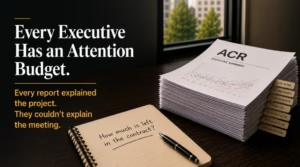
Every Executive Has an Attention Budget
What Capital Projects Reveal About Executive Leadership A capital construction project generates a stack of reports every month, and most executives will never read past
What Capital Projects Reveal About Executive Leadership A capital construction project generates a stack of reports every month, and most executives will never read past

Sometimes the most consequential capital decisions appear after work begins. The roof is already off. The contractor calls to report a deteriorated roof access door,
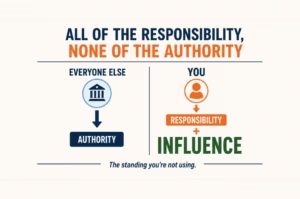
The Hidden Structural Failure The program manager who cannot approve a change order. The project executive who cannot release contingency. The construction director who escalates
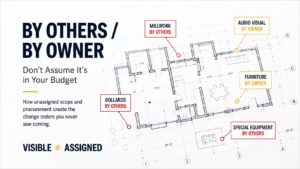
How fragmented scope ownership and procurement create the change orders you never see coming The Moment Every owner has the same conversation. A cost appears
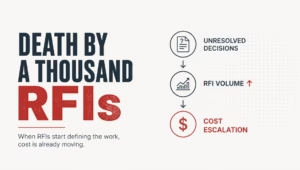
Projects rarely look dangerous when RFI volume first starts climbing. The schedule still appears recoverable.The budget may not yet show visible distress.Meetings continue. Reporting continues.
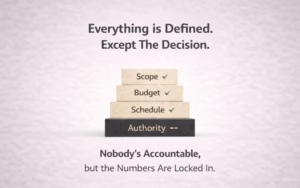
Most capital projects become harder to control long before construction starts. Not because teams stop working hard.Not because consultants or contractors suddenly become ineffective. Projects

If everything is being discussed in OAC, nothing is being managed at the right level. The OAC meeting is not a workshop.When it turns into

The schedule is issued and the meetings are running. The decisions guiding the work may still have no owner. A project can look organized while

When Everything Looks Done—but Nothing Is Easy to Build The drawings look complete.The budget is approved.The schedule is moving. Then construction starts—and no one can

What defensive proposals really tell you about scope gaps, risk transfer, and coming change orders The Early Signals Experienced Operators Don’t Ignore This pattern rarely

The problem isn’t the schedule—it’s when it’s treated as a commitment Most early project schedules aren’t wrong.They’re imagined — built before procurement, sequencing, and market

The most expensive part of some change orders isn’t the work – It’s the math. And the way that math is structured can cause the final

It’s deciding which projects deserve capital. That decision sits at the heart of effective capital project planning. Most people think capital projects get difficult once

Closing the Gap Between Legal Language and Construction Reality Most owners assume an AIA contract protects them. It doesn’t. At least, not from the problems

In capital projects, when someone says “just get it built,” alignment has usually already broken down. Every phase has a failure point when alignment is