
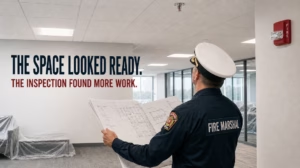
Substantial Completion Starts More Than the Closeout Clock
What owners should resolve before the certificate is accepted and the move date takes over. The drawings had been approved, the fire alarm tested, and
What owners should resolve before the certificate is accepted and the move date takes over. The drawings had been approved, the fire alarm tested, and

A five- or ten-year forecast identifies individual capital needs. The owner still has to decide which ones belong together. The five-year forecast placed lighting in
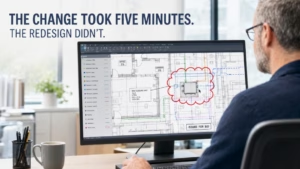
Before the owner pays for more design, the team has to determine whether the project changed or the original scope missed it. “Pencils down.” No
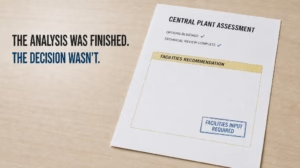
The knowledge may remain. Context and authority may no longer sit in the same place. The Facilities Director is gone. They may have retired, taken
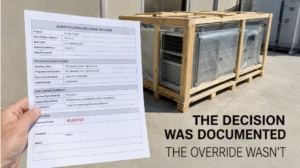
A vendor disagreed with a decision and took it to someone more senior. The owner is the one who has to live with what happened
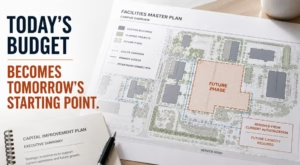
Some construction budget decisions don’t save money. They decide what the next capital project has to undo. Every capital project starts with more ideas than

Capital projects don’t just transfer buildings. They transfer the consequences of decisions—often without transferring the reasoning behind them. I’ll never forget a General Manager saying
The project is finished. The budget has been reconciled. The punch list is complete. The team gathers for the lessons-learned session. Someone asks what went
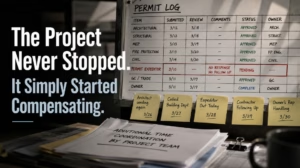
When trusted recommendations quietly change the conversation. I’ve worked with owners and decision-makers who recommended consultants, contractors, and design teams for all kinds of reasons.
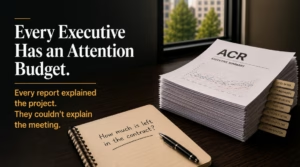
What Capital Projects Reveal About Executive Leadership A capital construction project generates a stack of reports every month, and most executives will never read past

Sometimes the most consequential capital decisions appear after work begins. The roof is already off. The contractor calls to report a deteriorated roof access door,
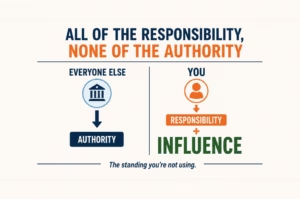
The Hidden Structural Failure The program manager who cannot approve a change order. The project executive who cannot release contingency. The construction director who escalates
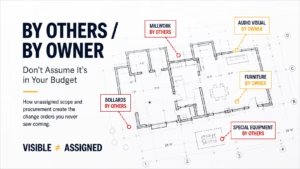
How fragmented scope ownership and procurement create the change orders you never see coming The Moment Every owner has the same conversation. A cost appears
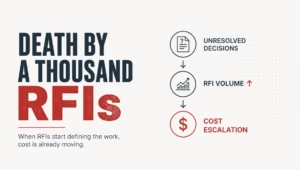
Projects rarely look dangerous when RFI volume first starts climbing. The schedule still appears recoverable.The budget may not yet show visible distress.Meetings continue. Reporting continues.
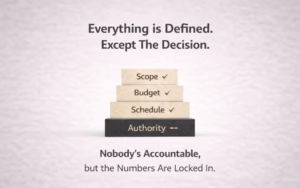
Most capital projects become harder to control long before construction starts. Not because teams stop working hard.Not because consultants or contractors suddenly become ineffective. Projects